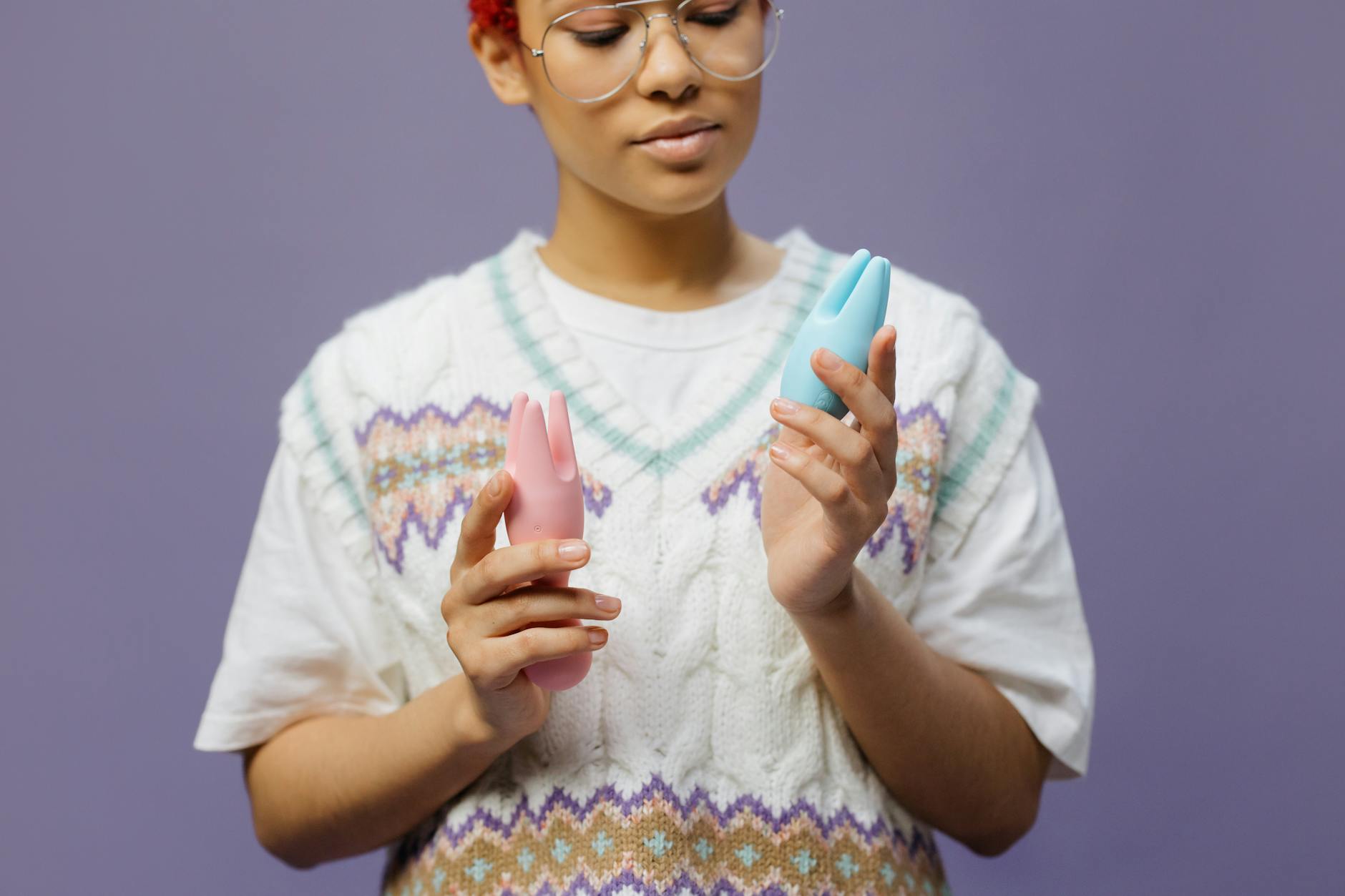
Let's talk about what happens to your body
Your hormones shift. Estrogen drops. The tissue covering your clitoris gets thinner, less cushioned. What used to feel good at full intensity now feels raw, sometimes painful. This isn't a personal failing. It's biology, and it's fixable if you know how to work with it instead of against it.
The good news: suction-based lemon vibrators like the Lem are specifically designed for this exact problem. Unlike traditional vibrators that rely on friction, suction stimulates without aggressive contact. But even suction needs the right approach when tissue is newly sensitive.
Why lemon vibrators handle sensitive tissue better than traditional vibration
Traditional vibrators buzz directly against tissue. When your clitoral hood is thin and sensitive, that direct contact can feel like sandpaper. Lemon sexual toys use air-pulse suction technology instead. The sensation is gentler, more diffuse. It stimulates the deeper nerve clusters without the mechanical pounding.
For people navigating hormonal changes, this distinction matters wildly. A standard vibrator at its lowest setting might still be too intense. A lemon sucker at pattern 1 or 2 often feels just right. The suction rhythm feels more like a wave than a jackhammer.
Many of my clients say switching from traditional vibration to a lemon clitoral vibrator during hormonal transitions was a turning point. They went from frustrated and sore to actually enjoying pleasure again.
How to start with your lemon vibrator on the gentlest settings
Here's what I recommend when you're rebuilding after hormonal changes.
First session: suction rhythm only, no intensity. Choose pattern 1 or 2. These are gentle, repetitive pulses without power. Don't pair this with speed. Just get used to how the sensation feels. Spend 10 to 15 minutes at this setting. This is you and your vibrator getting reacquainted.
Second session: same pattern, add time. Stay on pattern 1 or 2, but this time explore for 20 to 25 minutes. You're training your body's arousal response to gradually build. Longer warm-up time is your friend right now. Your nervous system needs time to recognize pleasure signals again.
Third session: introduce gentle intensity. If the first two sessions felt good, move intensity to level 1. Keep the same gentle pattern. This is the sweet spot for most people rebuilding after sensitivity issues. Many stay here for weeks, and that's completely normal.
Fourth session onward: inch upward only if it feels right. Level 1 intensity with pattern 1 or 2 is your baseline. If that's working, try moving to level 2 the next time. Skip a session or two in between intensity bumps. Give your body time to adjust.
The entire progression from "just starting" to "fully comfortable" typically takes 3 to 6 weeks. Some people stay at lower settings permanently, and honestly, that's fine. The goal isn't to reach maximum intensity. The goal is to feel good.
What lubrication does when tissue is tender
Even though a lemon vibrator is gentler than traditional vibration, lubrication still helps during hormonal transitions. Water-based lube reduces any friction between the suction cup and your skin. It also makes the seal more comfortable. Apply a small amount around the cup opening before you start.
You don't need much. A dime-sized amount spreads easily. More lube doesn't mean better sensation. It just means easier cleanup.
Lube also lets you use the vibrator for slightly longer without any irritation building up. If you're exploring for 20 to 25 minutes at sensitive times, that buffer matters.
Positioning and angle change everything
When tissue is newly tender, the angle at which you hold your vibrator can make the difference between comfort and soreness.
Try positioning the cup so the suction pulls slightly upward or to one side rather than straight down. This distributes pressure and sensation across a wider area instead of concentrating it on the most sensitive spot. Micro-adjustments matter.
If you're lying on your back, your hand position is going to be different than if you're sitting propped up on pillows. Experiment. Some people find that rotating the vibrator cup in tiny circles (rather than holding it still) creates a more diffuse sensation.
Your body is also changing internally right now. Blood flow patterns shift with hormones. Sometimes the most sensitive spot changes week to week. Stay curious. What worked last month might need tweaking this month. That's not failure. That's adaptation.
When pain means stop, and when it means adjust
Here's the clarity I try to give everyone: there's discomfort, and there's pain. Discomfort is sometimes part of rebuilding pleasure after hormonal shifts. A slight rawness, a minor ache, a feeling of "I'm almost there but not quite ready for this yet." That's data. That tells you to back off the intensity or duration.
Pain is different. Sharp, shooting, or burning sensations mean stop immediately. Pain during or after sex is often a sign of genitourinary syndrome of menopause (GSM) or another treatable condition. This is worth mentioning to your doctor. Topical estrogen creams exist specifically for this and work beautifully.
If you've been at your current intensity level for 3 to 4 weeks and it still doesn't feel good, pain rather than discomfort, that's also a conversation to have with your healthcare provider. A lemon clitoral vibrator should enhance your pleasure, not cause you ongoing pain.
The patience piece (and why it matters psychologically)
Slowing down your vibrator settings is also slowing down your expectations. This can feel frustrating if you're used to reaching orgasm in 5 minutes. When you're rebuilding sensitivity, your timeline changes. 20 minutes might become your new normal. Sometimes 30.
Here's what I notice with my clients: they often stop feeling frustrated once they reframe this. It's not slower. It's longer foreplay. It's more pleasure, stretched out, over a wider window. Some people report that their orgasms actually feel more intense at the end of a 25 minute session than their old 5 minute ones ever did.
That shift, from "I'm broken" to "I'm exploring," is where sustainable pleasure lives. Your lemon vibrator is the tool. Your mindset is the actual magic.
Settings to revisit seasonally or after life changes
Hormonal shifts aren't one-time events. They're ongoing. Seasonal changes, stress cycles, medication shifts, relationship tension, all of it affects your body's sensitivity.
I recommend checking in with your settings every 2 to 3 months. What felt right in January might need tweaking in March. This doesn't mean you're going backward. It means you're staying attuned.
If you've progressed to level 3 intensity and suddenly level 2 feels better, that's not failure. That's information. Your body is telling you something changed. Hormones shifted, stress elevated, or your nervous system is asking for something gentler. Listen.
Keeping notes (even just mental ones) helps. "That pattern with that intensity felt best on Tuesday." Over time, you'll see patterns emerge. Maybe weekday sensitivity is different from weekend. Maybe the first week after your period feels different. Knowledge is power.
When to upgrade or expand your toolkit
Once you've spent 6 to 8 weeks rebuilding at lower settings on your lemon clitoral vibrator, you have options. Some people are perfectly happy staying with pattern 1 and level 2 forever. Others want to explore higher intensity. Some want to bring a partner into the experience, which introduces a whole new dynamic.
If you're in a relationship, this might be the moment to talk about what you've learned. "I've been rebuilding my pleasure, and here's what feels good right now." Involving your partner can actually deepen intimacy, especially if they understand that sensitivity changes are temporary and manageable.
You might also find that different settings work for different moods. A weekend morning calls for 25 minutes at level 1. A weeknight wind-down is 10 minutes at level 2. Flexibility is freedom.
FAQ
Why does my lemon vibrator feel too strong even on the lowest setting?
Lower your exposure time first, not just the intensity. Start with 5 to 10 minutes at pattern 1 only (no intensity activation). Your nervous system might need time to recognize the sensation as pleasure rather than overwhelm. You're also probably not using enough lubrication. Add a tiny bit of water-based lube around the cup, and try again.
Can I use my lemon vibrator if I have diagnosed genitourinary syndrome of menopause?
Maybe, but you should talk to your doctor first. GSM often benefits from topical estrogen cream, which typically makes tissue more resilient within 2 to 4 weeks. Once tissue has improved, a lemon clitoral vibrator can be a wonderful tool. Using vibration before treating GSM might cause more irritation, not less.
How long does it usually take to rebuild sensitivity?
Usually 4 to 8 weeks. Some people feel significant improvement in 2 to 3 weeks. Others take 12 weeks. Hormonal changes are different for everyone. Progress isn't linear. Some weeks feel great. Other weeks your body asks for less stimulation. Both are normal.
Is it okay to use my lemon vibrator every day during hormonal transitions?
Daily is fine if it feels good. Some people use it daily and have no issues. Others prefer every other day or 3 to 4 times a week. Listen to your body. If you feel sore or irritated, take a break. Your tissue needs rest to recover and strengthen. Consistent use at very low settings is usually gentler than intense use once a week.
What if I feel numb or nothing at all, even with my lemon vibrator?
Numbness is different from soreness and often needs a different approach. Start with 15 to 20 minutes of suction at pattern 2 (no intensity). The pulse rhythm sometimes wakes up nerve endings better than constant sensation. You might also try different positioning or movement. If numbness persists beyond 4 to 6 weeks, mention it to your doctor. It can be a sign that tissue needs medical support, like topical hormone therapy.
Should I use a lemon vibrator or traditional vibration during recovery from hormonal changes?
Lemon suction vibrators are gentler and less likely to irritate newly sensitive tissue. They're the better choice during the rebuilding phase. Once your sensitivity has normalized over several weeks, you can experiment with traditional vibration if you want. But many people switch to suction and never go back.
You're not starting from zero
When hormonal changes affect your pleasure, it's easy to feel like you're beginning again from scratch. You're not. Your body still knows how to feel good. It just needs time, patience, and the right tool. A lemon vibrator, with its gentle suction design, lets you rebuild on your own timeline. Start low, stay curious, and trust that pleasure is absolutely within reach again.
If you have questions or want personalized guidance for your specific situation, reach out. That's what I'm here for.