The thought that terrifies people most
Let's be real. The scariest thing isn't that pleasure feels different. It's the conviction that it's gone for good. That your body has somehow switched off and won't switch back on. That you're broken in a way that lasts.
I hear this from people across age groups and life stages. After hormonal changes. After years of a mismatched partnership. After loss or grief. After periods of high stress or numbness. The fear is concrete: "What if I can't feel it anymore? What if I've waited too long?"
Here's the thing I've learned from two decades of working with couples and individuals: the fear is almost never accurate. The capacity for pleasure doesn't actually vanish. What happens is more complicated and, luckily, much more fixable.
What's actually happening
When people report that orgasm feels impossible or that arousal won't come, they're usually describing one of three things, sometimes all three at once.
Threshold shift. Your body isn't broken. It's just asking for something different. After hormonal changes, stress, or years of the same stimulation pattern, the nervous system needs a different input to wake up. A lemon clitoral vibrator works here because the suction pattern is new. New stimulation bypasses the nervous system's adaptation to old ones.
Psychological stall. This is the big one. You've decided you can't, so your body agrees. The brain is the largest sexual organ in your body. If it's convinced pleasure is unavailable, the nervous system cooperates fully. Anxiety about performance or fear of disappointment becomes self-fulfilling.
Physical deconditioning. The pelvic floor tightens when you're anxious. You stop trying. Arousal becomes harder. The cycle spins tighter. This is common and fully reversible once you interrupt the loop.
None of these mean you're broken. They mean you need a reset.
Why a lemon vibrator disrupts the fear loop
A lemon sucker or lemon clitoral vibrator interrupts the cycle in three specific ways.
First, it does something your hand or a partner's touch cannot do reliably. The air-suction pattern stimulates in a way that feels novel to your nervous system. Your brain can't say "this won't work" if it's never felt this before. The pattern bypasses the anticipatory anxiety.
Second, it removes the pressure to perform for anyone else. If you're using it alone, there's no partner watching. There's no timeline. There's no expectation of a particular outcome. Pleasure becomes genuinely about what feels good, not about proving anything.
Third, the pattern itself is forgiving. You don't need to be in a specific arousal state for a lemon clitoral vibrator to feel good. People often say, "I didn't think I could feel anything until I tried this." The suction can wake up sensation without requiring you to bring arousal to the table first.
How to actually use it when fear is in the way
Start without expectation.
This is important. You're not trying to have an orgasm. You're not trying to prove your body works. You're literally just exploring what sensation feels like right now, at this moment, with this new tool.

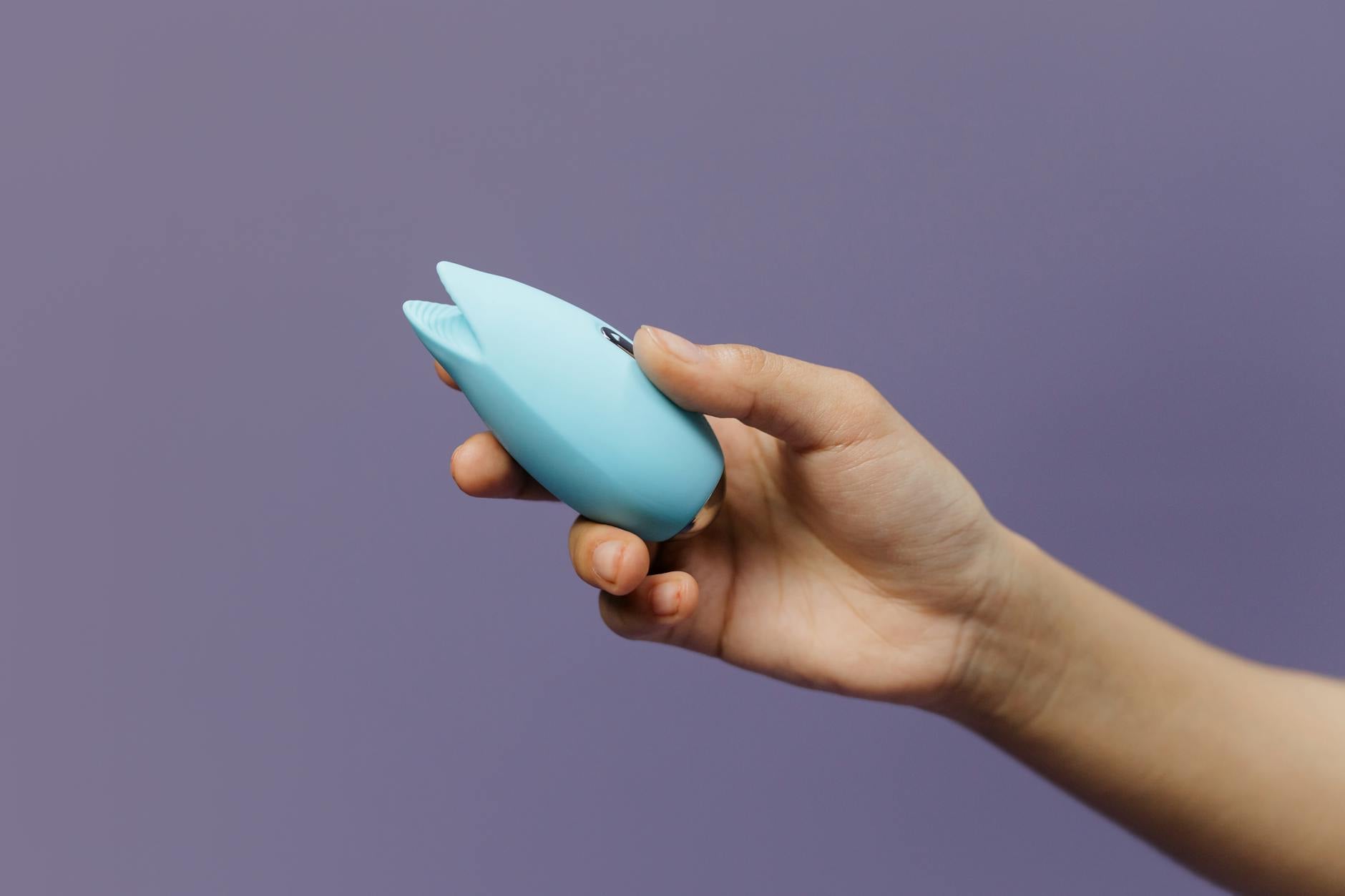
Photo by DRT.fm on Pexels
Use it on the lowest pattern first. You're mapping what feels good, not chasing intensity. Spend 5-10 minutes just noticing. Does it feel like nothing? That's data. Does one spot feel more responsive than another? That's data too.
Sexual confidence rebuilds through small evidence, not big breakthroughs. If you notice even a flicker of sensation or a moment where you forget you were anxious, that's the win. Not an orgasm. Not even necessarily arousal. Just a moment where your nervous system relaxed enough to receive input.
Repeat this for a few sessions before expecting anything more. Your body isn't going anywhere. You're retraining your nervous system to believe pleasure is possible again, and that takes time.
The conversation your brain needs to hear
When you're using a lemon clitoral vibrator, you're also arguing with a belief system. Your brain is likely telling you one or more of these things: "This won't work. You've waited too long. Your body is different now. You're too old. Too stressed. Too disconnected. This is silly."
You don't have to argue back. You can just notice the thought and keep going. Every minute you use the tool is evidence that contradicts the fear. You're not trying to convince yourself. You're gathering data in real time.
Some people find it helps to name what they're doing: "I'm rebuilding this. I'm taking my time. I'm giving my body permission to feel." Others find words get in the way and silence works better. There's no right approach. The point is intentionality, not perfectionism.
Pacing matters more than intensity
One mistake I see is people jumping from weeks of avoidance to aggressive use. Your nervous system doesn't work that way. It needs a gradual ramp.
Week one: lowest setting, 10 minutes, no pressure.
Week two: lowest or second setting, 15 minutes, same zero-pressure stance.
Week three: introduce variations if something started to feel good. Stay with what works.
Week four and beyond: let your body lead. If arousal starts building, great. If it doesn't, you're still rewiring the belief that pleasure is possible.
Some people reconnect with orgasm in two weeks. Others take months. Both are normal. The timeline doesn't matter. The consistency does.
When a partner is in the picture
If you're rebuilding pleasure with someone else in the room, you need a conversation that doesn't happen during sex. Tell them: "I'm working on reconnecting with my own pleasure. I need to do some of this alone first. When I'm ready, I'll let you know."
You're not rejecting them. You're protecting the process. A partner who loves you wants your genuine arousal, not performance. Make that clear. Most partners respond with relief.
When you do invite them back in, let them know what you've discovered. "The lemon vibrator feels good here." "I need more time to warm up." "I don't want to focus on orgasm yet." Specific information replaces the anxiety of guessing.
One more thing about timing
The hardest part of rebuilding sexual confidence is often the in-between phase. You're not in the depths of hopelessness anymore, but you're not back to easy pleasure either. This is when people often quit, thinking "Well, it didn't work."
That's exactly the moment to keep going. You're not broken. You're in the middle of rewiring. A lemon clitoral vibrator isn't a magic fix. It's a tool that helps your nervous system remember that pleasure is available. The rest is patience and repetition.
FAQs
How long does it usually take to feel something with a lemon vibrator?
Some people feel sensation immediately. Others take a few sessions to notice anything. If you're trying for the first time after a long period without sexual stimulation, give yourself at least three to four sessions before deciding it's not working. Your nervous system is still waking up.
Can you use a lemon clitoral vibrator if you're completely numb down there?
Yes, actually. That's one of the situations where air-suction toys like a lemon vibrator shine. Because the stimulation pattern is different from direct touch or traditional vibration, many people feel something even when they thought they were completely numb. You're not expecting traditional sensation. You're just curious about what happens.
Is it normal to feel nothing the first time and then feel something the second time?
Completely normal. Your nervous system is cautious. The first time is often just information gathering. By the second or third time, your body realizes it's safe and starts responding. Patience is the real tool here.
What if you're using it alone but still feeling performance pressure?
That's your internal voice, and it's worth noticing without judgment. The narrative usually goes: "This should feel better by now. I should be more excited. This is taking too long." None of that is true. You're exactly on track. When the pressure comes up, slow down. Breathe. Remind yourself there's nowhere to be.
Can lemon vibrators help if your pleasure issues are about relationship disconnection?
Partially. A lemon clitoral vibrator can rebuild confidence in your body's capacity. But if the deeper issue is emotional distance or resentment in your partnership, you need both tools. Using the lemon vibrator alone might help you feel pleasure again. But the relationship conversation still needs to happen. They're separate tasks.
How do you introduce this to a partner without it feeling like rejection?
Don't frame it as "I need to do this alone because of you." Frame it as "I'm doing this for me, and when I'm ready to share it with you, I will." Most partners understand that. If they don't, that's a different conversation about partnership and support, and it might be worth having with a couples counselor.
What comes after
Once you've rebuilt belief in your body's capacity, you get to decide what pleasure looks like going forward. It might look like partnered sex. It might look like solo exploration with a lemon vibrator. It might look like a mix. The choice is yours because the fear has loosened its grip.
The capacity was never actually gone. You just needed permission to find it again.