Let's be real about the disconnect
Your body is aroused. Your mind is... somewhere else entirely. Maybe scrolling through your phone three minutes ago, maybe stuck on a work deadline, maybe thinking about what your partner said at dinner. This is one of the most common frustrations I hear in my practice, and it almost always comes with shame attached. Like something is fundamentally broken.
It's not. Your nervous system is just operating in two different channels, and they're not talking to each other.
The neuroscience of fragmented arousal
Here's what's actually happening. Arousal has two pathways: the automatic nervous system (which your body triggers on its own) and the cortical pathway (which is all your thoughts, context, and emotional state). When you're distracted, stressed, or emotionally disconnected from your partner, the cortical pathway gets noisy. Your brain literally overrides the arousal signal your body is sending, and suddenly the whole experience feels hollow.
This is especially common after relationship conflict, during periods of disconnection, or when you're carrying resentment you haven't voiced. Your body might respond to physical stimulation because it's wired to do that. But your brain knows something's off, and it refuses to participate fully.
The result? You can touch yourself. You might even have physical sensations. But the pleasure feels thin, mechanical, unsatisfying. It's like watching a concert on mute.
Why lemon vibrators work differently for emotional arousal
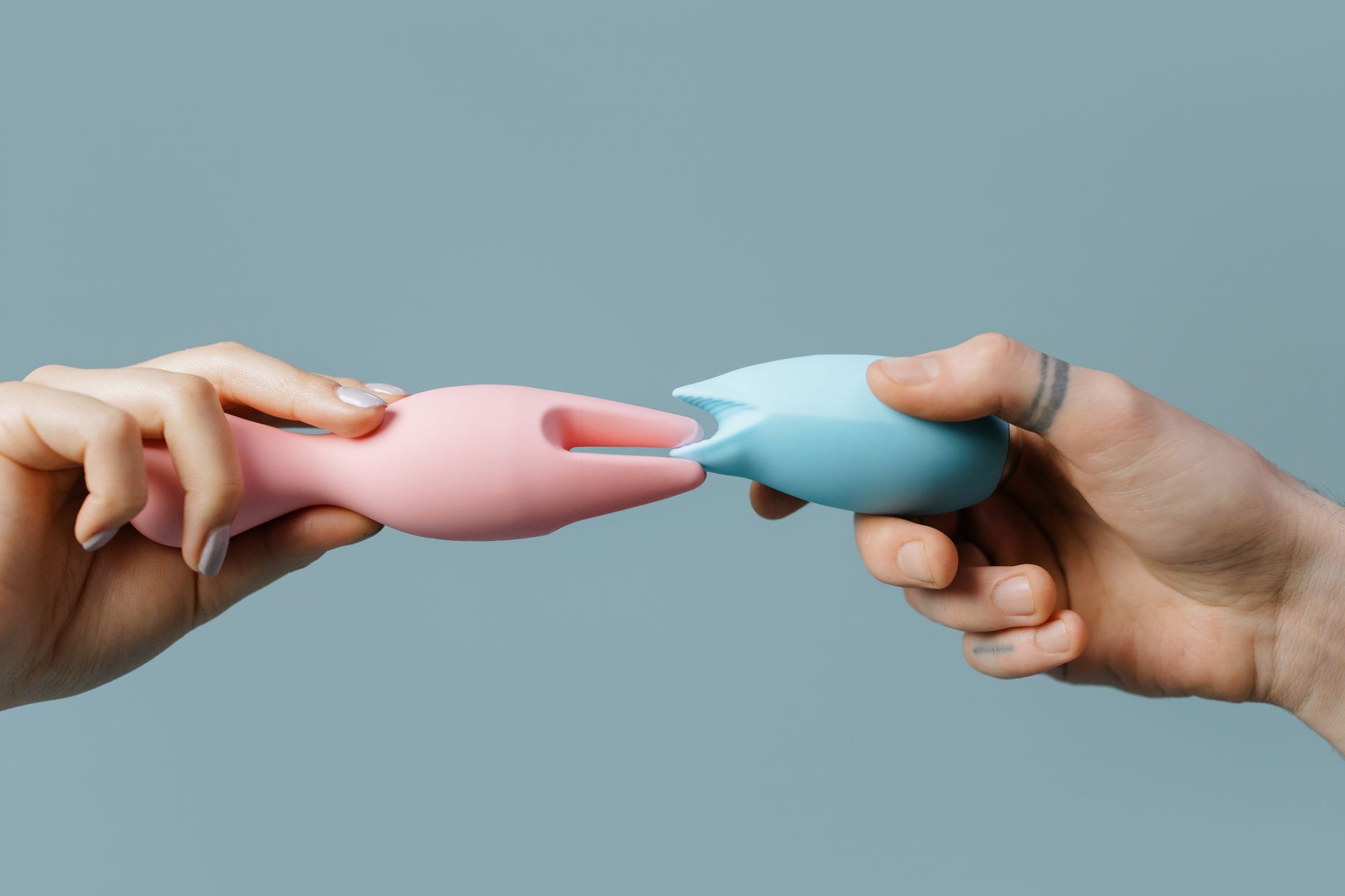
A lemon vibrator (or any quality clitoral vibrator using suction technology) works because it creates a different kind of stimulation than your hand can provide. It's more intense, more sustained, and honestly, more attention-demanding.
When you're using a lemon clitoral vibrator on yourself, you can't half-pay attention to it. The intensity of sensation is high enough that it pulls your focus back into your body. You have to stay present with it in a way that manual touch doesn't require. That presence is the first step toward reconnection.
Second, the suction sensation itself is novel enough that it breaks the thought loop. Your brain stops cycling through work emails and relationship worries because there's something new happening that demands your attention.
Third, and this matters most for emotional arousal: the physical intensity creates a stronger signal to your nervous system. That stronger signal starts to override the cortical noise. Your brain gets the message that something significant is happening, and it starts releasing the neurochemicals that go with genuine arousal, not just physical response.
Starting when your mind is still elsewhere
Don't wait until you feel emotionally connected to use the vibrator. That's backwards. You use it to help create that connection.
Here's the process:
Step one: Set a boundary on distractions. Phone in another room. Partner knows you need 20 minutes. TV off. This isn't about being precious. It's about giving your nervous system a chance to consolidate the arousal signal without competing inputs.
Step two: Start on pattern 1 or 2. Lower intensity lets you ease in without overwhelming yourself. You're not trying to come right now. You're trying to listen to what your body is telling you.
Step three: Pay attention to where your mind goes. Don't judge it. If you're thinking about your grocery list, notice that. Gently redirect attention back to sensation. "Where am I feeling this? What does it actually feel like?" Repeat.
Step four: Wait for the shift. It usually comes around 10-15 minutes if you stay focused. That's the moment when your brain catches up to your body. The sensation stops feeling external and starts feeling real. That's when the pleasure deepens.
Rebuilding emotional connection with a partner
If the disconnection is happening within a relationship, this is even more important to address directly. A lemon vibrator can help you reconnect with your own body first. But the emotional piece requires conversation.
Here's what I recommend: explore solo pleasure with a lemon clitoral vibrator on your own first. Rebuild your confidence that the connection between body and mind is still available to you. Then, when you're ready, bring your partner in.
Show them what you've learned about your body. Let them watch or participate without pressure to perform arousal. Sometimes the most intimate thing you can do is be honest: "I need to rebuild this slowly. I need you to understand that my arousal isn't about you right now. It's about me finding my own body again."
If your partner gets defensive about this, that's real information. Emotional disconnection during sex often mirrors disconnection in the relationship itself. That's worth exploring with a therapist, not just a vibrator.
When the disconnect is about overwhelm
Sometimes fragmented arousal isn't about conflict. It's about carrying too much. Stress, caregiving, work burnout, health challenges. Your nervous system is in survival mode, and pleasure feels impossible.
In these cases, a lemon vibrator isn't the solution by itself. It's part of the solution. You also need to address the overwhelm: reduce something on your plate, get support for what you're carrying, talk to someone about what's making you numb.
But while you're working through that, a lemon vibrator can give you moments of presence and somatic relief. It reminds your nervous system what pleasure feels like. It's a small act of self-care that says, "My pleasure still matters even when everything else is hard."
The role of patience and self-compassion
Rebuilding the connection between your emotional brain and your arousal response takes time. You might use a lemon vibrator three times before the real shift happens. You might need to do this work for weeks. That's completely normal.
Be patient with yourself. Your nervous system isn't broken. It's protecting you. The fragmentation you're feeling makes sense given what you're carrying. The goal isn't to force yourself to feel connected. It's to slowly, gently, remind your body that it's safe to integrate pleasure with emotion again.
Every time you show up for that 20 minutes with genuine attention, you're rewiring the pathway. You're telling your nervous system that pleasure matters. That your sensation matters. That connection is possible.
FAQ: Reconnecting arousal and emotion
Can you have real orgasms when arousal feels emotionally disconnected?
Yes, but they often feel unsatisfying. A physically intense orgasm without emotional engagement can feel almost like a release, but not like pleasure. Some people describe it as "scratching an itch" rather than genuine satisfaction. This is why lemon vibrators help—the intensity can eventually pull your emotional brain back in, turning a physical response into a real experience.
How long does it take to rebuild the connection between body and emotion?
It depends on what caused the fragmentation. If it's recent stress or distraction, you might notice a shift in 2-3 sessions of focused solo time. If it's rooted in relationship conflict or deeper overwhelm, expect 4-6 weeks of consistent practice. Some people find it takes longer, and that's fine. Patience is part of the process.
Should I tell my partner I'm using a lemon vibrator to reconnect with my own arousal?
That's up to you and your relationship. Some partners find it reassuring to know you're doing the emotional and somatic work. Others might feel excluded or insecure. A good rule: if you're keeping it secret because you're worried about their reaction, that's a sign the relationship might benefit from a conversation about vulnerability and pleasure. A therapist can help facilitate that.
What if using a vibrator makes the disconnection feel worse?
Stop and check in with yourself. Sometimes when we pause and pay attention to sensation, we realize we're carrying emotional pain we hadn't acknowledged. This is real, and it's worth sitting with. It might mean you need to address the emotional piece first—talking to a partner, processing with a therapist, or giving yourself permission to grieve something that's shifted in your life.
Can a lemon clitoral vibrator help if the disconnection is about depression or anxiety?
It can be part of the picture. Depression and anxiety genuinely interfere with arousal at a neurochemical level. A lemon vibrator might help you feel something in your body during a period when nothing else feels good. But it's not a treatment for depression or anxiety. If you're struggling with either, please reach out to a mental health professional. The vibrator is an accessory to that work, not a replacement for it.
Is it normal to need higher and higher intensity over time?
Not necessarily. Some people do find they want more intensity as they rebuild arousal. Others find they need less as their nervous system learns to trust pleasure again. Pay attention to what's happening. If you're chasing intensity without satisfaction, it might mean the emotional disconnection is still there. That's worth exploring.
The path back to integration
Fragmented arousal is frustrating, but it's also a signal your nervous system is trying to send you. Something in your life or your relationship needs attention. A lemon vibrator won't fix the underlying issue, but it can help you stay connected to your body while you work through it.
The goal isn't to feel arousal all the time or to perform desire you don't feel. The goal is to rebuild the conversation between your mind and your body. To remember that your pleasure is allowed, even when the rest of your life feels complicated. To trust that integration is possible.
It usually is. You just have to show up for it.
Ready to explore more about reconnecting with yourself? Learn how arousal works when you're recovering from a pause in your sex life or discover what changes when you're dealing with scattered arousal. And if the disconnection is rooted in your relationship, this guide on emotional intimacy might help. If you have questions about what might work best for your situation, reach out.