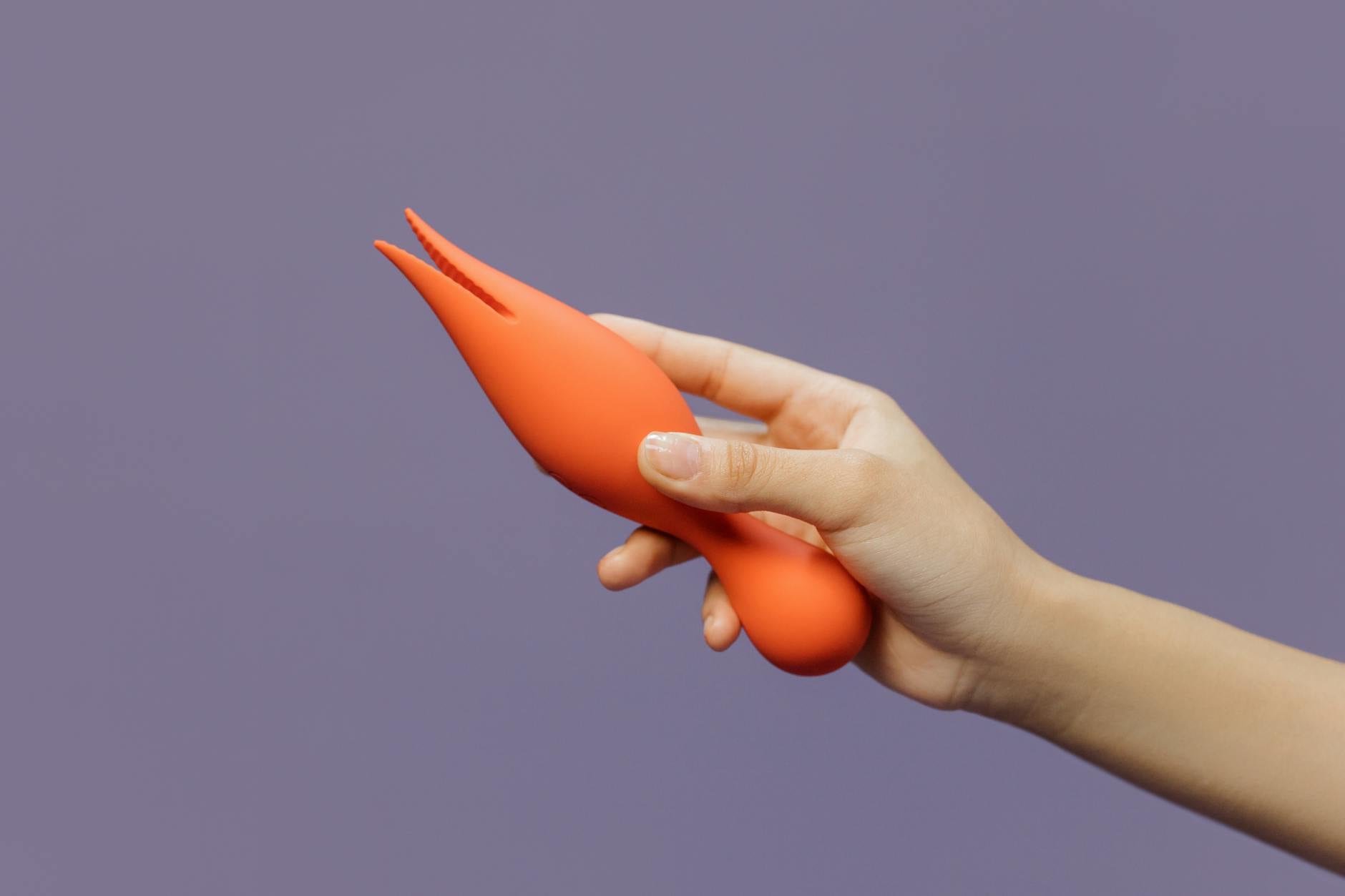
How to Use a Lemon Vibrator When Orgasm Feels Impossible After Hormonal Changes
Let's be real. You used to orgasm. Now you don't. Or you do, but it takes so long you give up halfway through, or your partner gets tired, or you just feel... nothing.
This is not a personal failure. It's not because you're getting older, losing interest, or broken. It's biochemistry. And there's a clear fix.
What hormonal shifts actually do to orgasm
Orgasm is a coordinated event. Your brain sends signals, your nervous system fires, blood vessels dilate, muscles contract. Hormones like estrogen and testosterone prime every single step. When they drop — whether from birth control changes, perimenopause, menopause, postpartum recovery, or medical treatment — that neural and vascular choreography gets out of sync.
Here's what changes:
Clitoral sensitivity dulls. Estrogen supports blood flow to the clitoris and keeps tissue rich with nerve endings. When it drops, the clitoris gets less attention from your circulatory system. You're not numb, but you're definitely working harder to feel the same stimulation.
The arousal ramp gets longer. It used to take five minutes to feel ready. Now it's fifteen or twenty. This isn't laziness. Your body is literally slower to flood with blood and activate your parasympathetic nervous system.
Orgasm thresholds shift. The intensity of stimulation needed to tip into orgasm often increases. The pattern of stimulation that worked for years suddenly feels wrong.
None of this means orgasm is gone. It means the path has changed.
Why traditional vibrators sometimes fail after hormonal shifts
Most clitoral vibrators rely on direct vibration. They buzz against the clitoris at a steady frequency, usually 5,000 to 10,000 Hz depending on the device.
When clitoral tissue is thinner or less blood-rich (both common after hormonal changes), that direct friction can feel irritating instead of pleasurable. You're working against reduced sensation and increased sensitivity at the same time, which is a frustrating combination.
A lemon sucker or suction-based vibrator works differently. Instead of vibrating against the surface, it creates a gentle seal and releases rhythmic pulses of air pressure. That suction stimulates the whole clitoral structure, not just the glans, and it does it without the mechanical grinding.
This matters because suction triggers different nerve pathways. Your clitoris has around 8,000 nerve endings. A traditional vibrator primarily stimulates the surface. Suction reaches deeper structures.
The science behind why suction helps rewire sensation
When you use a lemon clitoral vibrator after hormonal changes, you're not fighting reduced sensation with more intensity. You're changing the type of input entirely.
Research on suction-based devices shows higher orgasm completion rates in people with difficulties reaching climax compared to traditional vibrators. The reason: suction activates both the superficial and deep clitoral nerves simultaneously, creating a compound stimulus that requires less sustained arousal to reach threshold.
Translated: your brain gets a clearer signal. Your nervous system has an easier time recognizing "this is pleasure" and moving toward orgasm.
It's also gentler on thinner tissue, so you can use it longer without irritation. That matters because post-hormonal shifts, you might need 25 or 35 minutes to get there instead of five. A lemon sucker won't make that fast, but it makes it possible.
How to actually use a lemon vibrator when orgasm has felt impossible
Start with the right mental frame. You're not trying to force something. You're exploring a different sensation pathway. This takes pressure off and lets arousal actually build.
Warm up longer than you think you need to. Give yourself 10 to 15 minutes of foreplay, partnered touch, or erotic content before you introduce the lemon vibrator. Arousal priming matters more now than it did before. You're asking your body to wake up a nervous system that's used to being dormant.
Use it on the lowest setting first. Most lemon vibrators have 3 to 5 intensity levels. Start at level 1 or 2. You're not looking for immediate intensity. You're looking for signal clarity. Spend 5 minutes at a low setting so your nervous system learns to recognize the new sensation.
Focus on the clitoral glans, then move around. Start the suction directly on the clitoral head, but don't stay there the whole time. Slowly move the lemon vibrator around the whole vulva, the hood, the inner labia. You're building a map of where sensation lives now that it's changed.
Don't expect the same orgasm as before. This is crucial. Post-hormonal shift orgasms often feel different. They might be more localized instead of full-body. They might arrive more slowly. They might feel subtle instead of explosive. This doesn't mean they're wrong. It means you're learning a new body.
Breathe. Actually, deeply. Shallow breathing is a self-shutdown signal to your nervous system. When you feel yourself tensing or drifting, return to slow, deep belly breathing. This signals safety to your body and tells your brain it's okay to feel pleasure.
The role of patience and repeated practice
One session with a lemon clitoral vibrator won't rewire years of hormonal change. But consistent practice does. Your nervous system learns through repetition.
I recommend using the lemon vibrator three to four times a week, solo, for at least 10 to 15 minutes each session. The goal isn't orgasm every time. The goal is building a new neural pathway between sensation and pleasure.
After three to four weeks of consistent use, most people report that orgasm either returns or becomes significantly easier. After eight weeks, it typically becomes reliable again.
When to add your partner back in
If you're partnered, use the lemon vibrator solo first. Get comfortable with the sensation and the new rhythm of your body. Then introduce it with your partner present but not performing.
Meaning: your partner is there, maybe touching you elsewhere, but you're controlling the vibrator. This prevents the common trap where you're performing orgasm instead of actually feeling pleasure.
Only after you've had reliable solo orgasms should you experiment with your partner directly using the lemon vibrator on you.
The emotional piece that changes everything
Here's what nobody tells you about post-hormonal orgasm difficulty. Half of it is hormonal. The other half is narrative.
Your brain is carrying a story: "My body doesn't work anymore." Or "I'm too old for good sex." Or "Something is wrong with me."
Every time you try and fail, that story gets louder.
When you use a lemon vibrator and orgasm actually happens, you're not just experiencing physical pleasure. You're proving the story wrong. Your body does work. It just works differently. That's not failure. That's adaptation.
FAQs
Does using a lemon vibrator make it harder to orgasm without one?
No. A lemon sucker isn't a crutch that makes solo pleasure impossible. It's a tool that helps your body remember how to respond to stimulation. Once you've rebuilt that pathway, orgasm without the vibrator becomes easier too. Many people cycle between using it and not, depending on mood and time available.
How long should I use a lemon vibrator each session if orgasm feels far away?
There's no hard limit. You can use it for 20 minutes, 45 minutes, or until you reach climax. The key is not timing yourself. Using a timer puts pressure on you and tells your nervous system you have a deadline. Set aside time when you have nowhere to be, then let your body take however long it needs.
Can hormonal birth control or antidepressants also make orgasm hard to reach?
Absolutely. Both can suppress desire and delay orgasm, sometimes significantly. If you suspect medication is the culprit, talk to your doctor about timing (taking it at a different time of day sometimes helps) or alternatives. Using a lemon vibrator can help bridge the gap while you figure out the medication piece.
My partner thinks using a vibrator means they're not enough. How do I explain why I need the lemon vibrator now?
Reframe it not as a replacement but as a tool for a changed body. "My nervous system is responding differently right now, and this helps me feel pleasure again. That means we can both enjoy sex more." If they're still resistant, this is worth a deeper conversation about what sex means to both of you. Sometimes a couples therapist helps unlock that.
Is suction-based stimulation better than traditional vibration for everyone after hormonal changes?
Most people find it easier, but not all. Some prefer traditional vibration. The best approach is to try both and notice what your body actually prefers, not what you think should work. A lemon clitoral vibrator is worth testing because the mechanism is so different from what you've probably used before.
How do I know if my orgasm difficulty is hormonal versus relational or emotional?
That's complex and often both things at once. If orgasm disappeared suddenly after a medication change, birth control switch, or hormonal life event (perimenopause, postpartum), it's likely hormonal. If it faded gradually alongside stress, relationship tension, or body image shifts, it might be more psychological. Usually both are playing a role. A lemon vibrator helps with the physiological piece. A therapist or couples counselor helps with the relational one.
The path forward
Hormonal changes are real. Orgasm difficulty after those changes is real. And equally real is the fact that your body hasn't stopped being capable of pleasure. It's just asking you to change the approach.
A lemon vibrator isn't a magic fix. It's a bridge. It helps your nervous system recognize stimulation, helps you rebuild confidence in your body, and often returns orgasm to what felt impossible weeks earlier.
Your pleasure matters. And you deserve tools that actually work with your body as it is now, not as it used to be.
If you're still wrestling with this, or if hormonal changes are affecting your whole relationship, we're here to talk. Reach out at /contact and let's figure out the next step together.