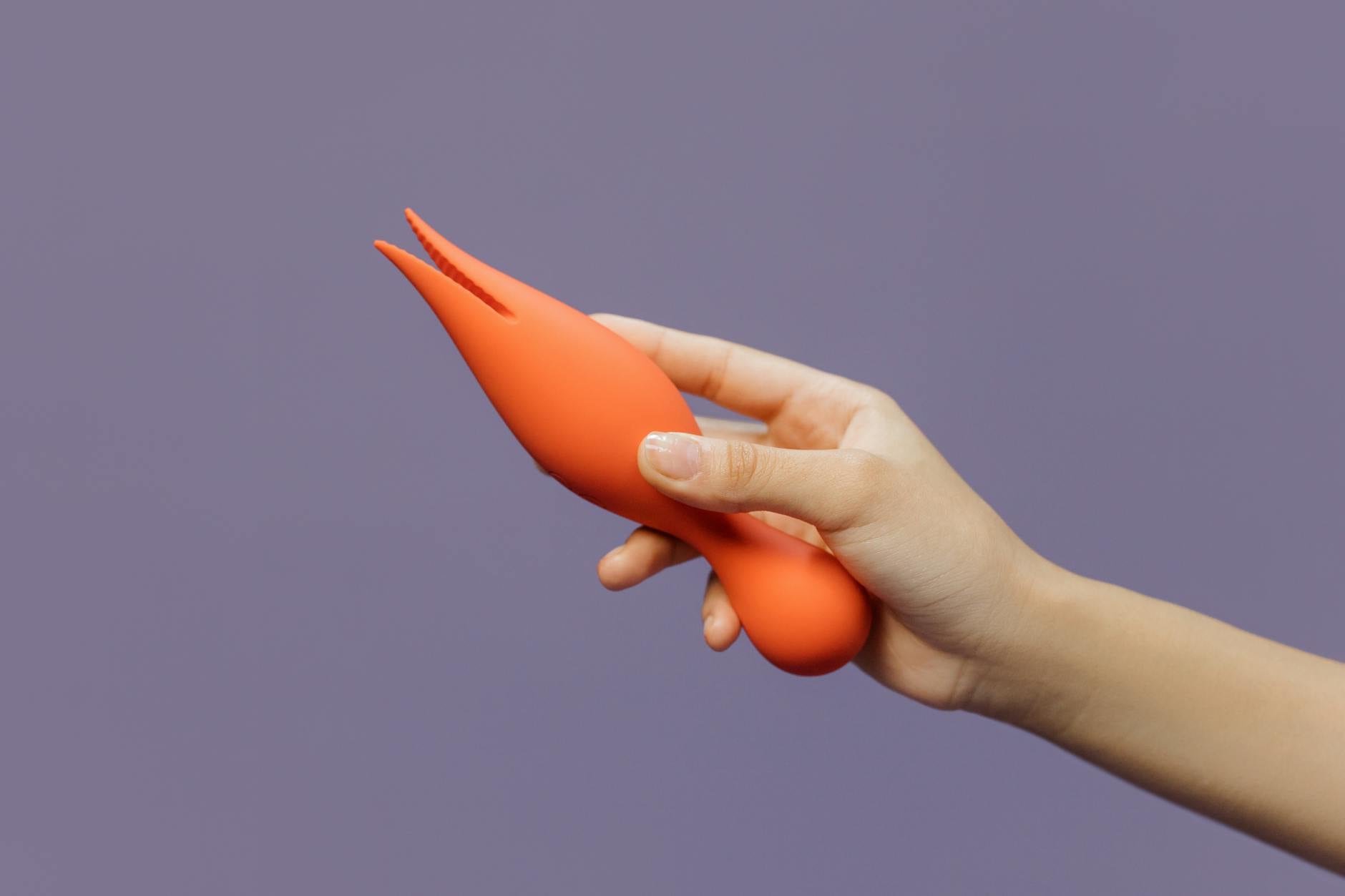
Let's talk about what stress actually does to desire
Your partner used to want you. Now they're exhausted, overwhelmed, or numb. Stress doesn't just make people tired. It hijacks the nervous system, floods the body with cortisol, and essentially tells the brain that survival matters more than pleasure. When someone's been running on empty for weeks or months, sex becomes one more obligation instead of a refuge.
Here's what I see in my practice: couples don't break because desire disappears. They break because they stop trying to rebuild it once it does. The good news is that a lemon vibrator can actually help you both step out of that trap without adding pressure or performance anxiety.
Why your partner's stress killed the mood (and what that means)
Stress does three things that directly kill arousal. First, it elevates cortisol and suppresses testosterone, which means the chemical foundation for desire gets switched off. Second, it floods the sympathetic nervous system (fight-or-flight mode), which is the exact opposite of what you need for arousal. Third, it creates decision fatigue. By 9 p.m., after a brutal day, your partner's brain is done making choices. Sex requires engagement. When you're depleted, engagement feels impossible.
That's not rejection. That's neurology.
The mistake most couples make is trying to talk someone back into desire. "We used to have sex three times a week," or "I miss you," or even gentler versions of pressure. What actually works is creating a way for pleasure to happen that requires almost no mental lift from your partner.
That's where lemon vibrators come in.
Why lemon clitoral vibrators work better when arousal is low
Unlike traditional vibrators, which demand a specific type of friction or rhythm, lemon vibrators use suction. Suction is gentler. It doesn't require the same kind of direct engagement from the body. Your partner can basically lie there and let sensation happen, which sounds passive but actually removes the performance pressure that stress makes unbearable.
Second, lemon vibrators are fast. With stress-flattened arousal, slower warm-ups often don't work. The sensation either builds or it doesn't. A lemon suction vibrator can activate pleasure in 5 to 15 minutes instead of 45. For someone whose nervous system is fried, that speed is a mercy, not a shortcut.
Third, the sensation is different enough that it can bypass the mental loops stress creates. Your partner isn't thinking about how tired they are or what they should be doing. The stimulus is novel, which means attention goes to the body instead of the spiral.
The conversation before you bring it out
Don't surprise your partner with a toy during sex. That's a one-way ticket to shame and more distance. Instead, pick a calm moment outside the bedroom. Afternoon coffee. A walk. Somewhere neutral.
Say something like: "I've noticed we haven't connected much lately, and I know you're under it right now. I don't want to add pressure. But I also don't want to stop trying to be close. I found something I think might actually help us both. Would you be open to trying it together?"
Notice what you're not doing. You're not saying "Your libido is broken" or "We need to fix this" or even "I'm frustrated." You're naming the real block (stress, exhaustion, distance) and offering a tool instead of blame.
If your partner hesitates, don't push. Listen to what the hesitation is actually about. Is it the toy itself? Body image? Fear of not being able to orgasm? Each of those is a different conversation, and pushing past "I'm not sure" only adds the kind of pressure that killed arousal in the first place.
How to actually use it together when stress is high
Start with a version of foreplay that doesn't demand much. Kissing is fine. Touch is fine. But the goal isn't to build to traditional sex. The goal is to feel each other's skin and let the nervous system downshift out of fight-or-flight.
When your partner feels ready, introduce the lemon vibrator. If they're receiving, they can lie back or sit against pillows. You hold it. This is important. Your partner doesn't have to manage anything. You're doing the technical work.
Start at the lowest setting. Let them feel what it does for thirty seconds without expectation. Then you can ask, "How does that feel?" or "Want me to move it?" or simply watch their face. Often, people who say they "can't feel anything" start feeling things once the pressure to perform is gone.
If arousal builds, keep going. If it doesn't, that's information, not failure. Sometimes one session is about reconnection and touch, not orgasm. Your partner's body might need several sessions before it trusts that pleasure is safe again.
What to actually expect (and manage)
Don't expect an orgasm the first time. Stress doesn't just lower desire. It can make orgasm nearly impossible. Your partner's nervous system has been in protection mode. Pleasure requires a nervous system that feels safe enough to let go.
Also expect that using a lemon vibrator together might feel awkward at first. There's a toy. There's negotiation. There's something that looks clinical sitting on the nightstand. That awkwardness is totally normal and usually disappears after the second or third time.
What you might actually notice: your partner relaxes. Their breathing changes. They make eye contact instead of staring at the ceiling thinking about work. That's the win. Orgasm is a bonus.
If your partner's stress is truly severe (we're talking depression, burnout, genuine crisis), a lemon vibrator is a lovely tool but not a substitute for actual support. Therapy helps. Reducing their actual workload helps. Sleep helps. The vibrator helps by making it easier to reconnect while they're also dealing with the deeper stuff.
How to keep it from becoming another source of pressure
Here's the trap: you introduce the tool to make things easier, and somehow it becomes another thing you're tracking. "When was the last time we used the lemon vibrator?" If you catch yourself keeping score, stop.
Instead, treat it like a permission structure. On nights when your partner is still exhausted but you both want to feel close, it's there. On nights when they genuinely can't, they can't. A tool removes pressure only if you don't use the tool itself as a measure of whether your partner loves you.
The real win happens when your partner's stress starts to ease and they say, "I actually want to try that again." That's the moment you know the nervous system is healing.
Building back desire after stress breaks it
Desire isn't something you force back. It's something you create the conditions for. A lemon vibrator helps create those conditions by making pleasure accessible when everything else feels impossible.
What also helps: lowering the bar for connection in general. Hold hands. Take a shower together. Sit in silence. Touch isn't just foreplay. It's how nervous systems communicate safety to each other. When your partner's been stressed, their body is running a threat-detection program. Gentle, non-sexual touch gradually tells that program to stand down.
Use a lemon clitoral vibrator as part of that landscape, not as a problem-solver on its own. Pair it with actual stress relief. Pair it with patience. Pair it with the message that you're not keeping score and you're not going anywhere.
Desire comes back when someone feels safe enough to let it.
FAQ
Why does stress kill libido even when the relationship is good?
Stress floods your system with cortisol, which directly suppresses testosterone and reproductive hormones. Your body literally can't prioritize pleasure when it's in survival mode. This isn't about your relationship. It's pure neurology. Once the stressor eases, libido usually comes back on its own.
Is using a vibrator together actually going to help, or will it feel weird?
It often feels weird the first time. That weirdness usually disappears by the second or third use once you're both more comfortable. The real value is that a lemon vibrator removes the pressure of "I have to perform" or "I have to want this." Your partner can just receive sensation, which is much easier when they're depleted.
What if my partner is embarrassed about using a toy?
Embarrassment often comes from shame about pleasure in general, or fear that needing a toy means something is wrong. A direct conversation helps. You might say, "This isn't about you. It's about us finding a way to feel close when you're running on empty." Sometimes starting with solo exploration (them using it alone) feels less vulnerable than using it together.
How often should we be using the lemon vibrator together?
There's no "should." Once or twice a week is common, but some couples use it more, some less. The goal is reconnection, not frequency. If you're using it because you think you have to, it's become another obligation. If you're using it because you both want to feel close, the frequency takes care of itself.
Will a lemon vibrator work if my partner literally can't orgasm from stress?
It might help the nervous system relax enough that orgasm becomes possible again, but not always immediately. Stress can create genuine anorgasmia, especially if it's chronic. In those cases, the vibrator's job is to help your partner feel pleasure and connection, not to "fix" them. Orgasm might come back once the stress does ease, or your partner might find other ways to experience pleasure that work better. Follow their lead.
How do I know if my partner is actually enjoying this or just doing it for me?
Ask. Really ask. "Does this feel good to you?" or "How is this actually for you?" Watch their body language. If they're tense, barely breathing, or staring at the ceiling, they're probably not enjoying it yet. If their shoulders drop, they make eye contact, and they breathe deeper, you're on the right track. Enjoy doesn't always mean orgasm. It can mean "I feel safe with you" or "My body is waking up."
When to reach out for more help
If your partner's stress is severe enough that it's affecting sleep, appetite, or basic functioning, a lemon vibrator isn't the main solution. Therapy is. So is stress management, sometimes medication, and honestly, sometimes lifestyle change. A vibrator is a lovely tool for reconnection. It's not a treatment for depression, burnout, or crisis.
If you and your partner are struggling to reconnect even with tools in place, or if the distance feels deeper than stress, couples therapy can help. A trained therapist can help you both understand what's really happening and how to build back intimacy from the ground up.
The goal is to get your partner back to a place where desire can exist. A lemon vibrator helps clear one path. But sometimes the bigger work is supporting them through whatever's actually causing the stress.