Let's talk about sensitive tissue
Here's the thing: a lot of people assume tender clitoral tissue means you need to avoid vibration entirely. That's not true. What it actually means is that the suction and pressure mechanism of a lemon vibrator works differently on your body than it might on someone else's. And honestly, that's where things get interesting.
Tender tissue isn't a flaw. It's just more reactive. Which means lower settings often deliver more intense sensations than they would for someone with thicker tissue. You're not broken. You're just better at feeling everything.
What makes tissue tender in the first place
Tenderness can come from a few places. Sometimes it's recovery from childbirth or pelvic trauma. Sometimes it's hormonal shifts that have thinned the tissue (menopause, certain medications, or hormonal birth control). Sometimes it's just how your body is built. Sometimes it's inflammation from overuse, friction that didn't feel great, or irritation from the wrong lube or toy material.
The key thing to know: sensitivity is temporary and manageable. It's not a permanent state, and it definitely doesn't mean your pleasure is off the table. It just means we're going to adjust the approach.
How lemon suction works differently on tender tissue
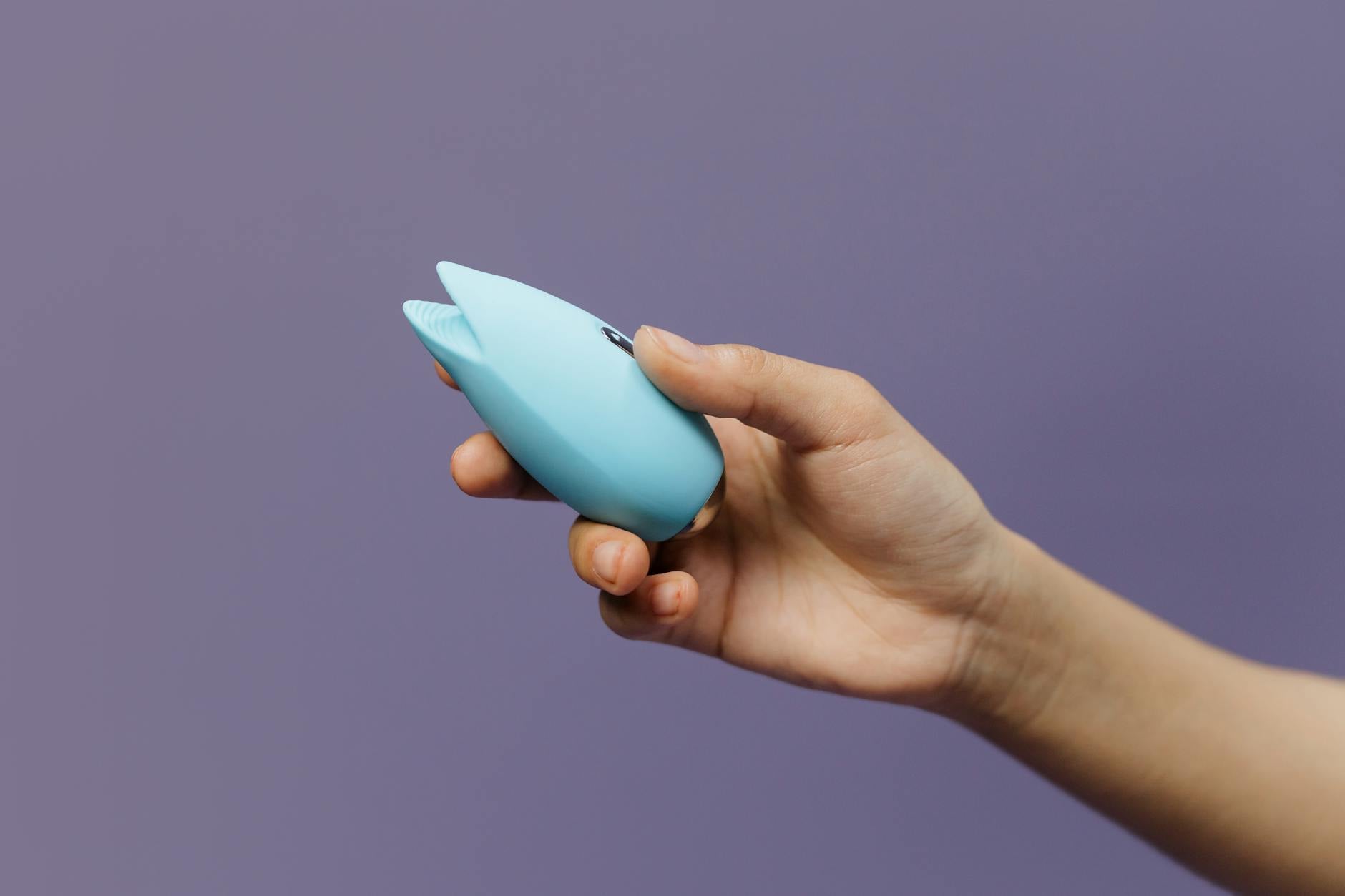
The Lem and other lemon clitoral vibrators use suction and pulse patterns rather than traditional vibration. This is actually a huge advantage when you have tender tissue. Why? Because suction distributes pressure differently than a vibrating head does. It's broader, gentler, and more diffuse.
That said, even suction has settings. Most lemon vibrators have 5-10 intensity levels, and if you have tender tissue, you're probably going to live somewhere between levels 1 and 4. That's not a limitation. That's actually where the most nuanced, powerful sensations happen for your body.
The warm-up matters more than the setting
Here's something that changes everything: tender tissue responds better to longer warm-up than to a specific setting number. Your clitoral tissue needs time to engorge, which actually makes it more resilient and more sensitive at the same time. This usually takes 10-20 minutes of foreplay or external stimulation before you even turn on your lemon vibrator.
Many people with tender tissue rush to the toy because they're worried about comfort. The opposite approach works better. Spend time with hands, mouth, or even just breathing and touching. Let the blood flow in naturally. Then, when you do introduce your lemon clitoral vibrator, your tissue is already primed and forgiving.
You might find that setting 2 after a proper warm-up feels incredible, whereas setting 2 without warm-up feels sharp or uncomfortable. The setting didn't change. Your tissue did.
Start at level 1 and move up slowly
First time using a lemon vibrator with tender tissue? Always start at the lowest setting and stay there for at least 5 minutes. This isn't a test. You're not trying to rush to the "real" pleasure. You're actually letting your nervous system get used to the sensation. After 5 minutes, your clitoral tissue often becomes slightly less sensitive to that exact stimulus, which paradoxically allows you to feel more sensation at a deeper level.
Then, if level 1 feels good, try level 2. Spend another 3-5 minutes. Notice how it feels. There's no rush to go higher. Some people with tender tissue find their sweet spot at level 2 or 3 and never go further. And that's completely fine. Those lower settings can deliver mind-blowing orgasms.
The pattern rhythm matters too. Many lemon vibrators have different pulse patterns at each level. Sometimes a higher level might actually feel gentler because the pattern is slower or more spaced out. Don't skip around randomly. Go through the settings intentionally and notice which patterns your body responds to.
Angle and positioning make a huge difference
If lower settings are causing discomfort, it might not be the intensity. It might be the angle. Tender tissue is more sensitive to direct, perpendicular pressure. Angling your lemon vibrator so the stimulation comes from the side, or at a lower angle, often feels much better than straight-on contact.
Experiment with how you're positioning yourself. Are you lying flat? Angled? With legs together or apart? Small changes here shift where the pressure concentrates. You might find that level 1 feels sharp when you're positioned one way and absolutely perfect when you adjust your hips.
Also consider using a thin piece of fabric between your clitoris and the toy. A soft cloth or even a silky pillowcase doesn't reduce sensation. It diffuses it. For some people with very tender tissue, this single change makes the difference between uncomfortable and incredible.
Lubrication changes everything
Water-based lube with tender tissue isn't optional. It's foundational. The suction mechanism of a lemon vibrator works best with moisture, and it reduces friction that can feel sharp or irritating on sensitive tissue. Apply generously. More lube than you think you need.
Some people with tender tissue find that warming the lube slightly (holding it between your hands for a moment) feels better than room temperature. It reduces the sensory shock a bit.
Reapply partway through. After 5-10 minutes of stimulation, lube dries or gets displaced. Reapply before you move to a higher setting. You might find that the reason level 3 felt uncomfortable last time is simply that the lube had dried. Same setting, more lube, completely different experience.
Communication matters if you're with a partner
If you're using your lemon vibrator with a partner, this is important: tender tissue means YOU need to be in control. Not because your partner is doing anything wrong, but because you're the only one who can feel what's happening in real time.
Keep the toy in your hands. Move it, adjust the angle, control the timing. Your partner can be involved—they can help with warm-up, apply lube, hold you close—but the vibrator itself should stay under your control until you're very comfortable with the sensations.
This also means being willing to say "lower intensity" or "wait a minute." That's not a rejection. That's you being a good partner to your own body.
When pain appears, shift strategy
There's a difference between tender tissue and pain. Tender tissue feels intense, maybe a little sharp, but it transitions into pleasure after warm-up or slight adjustments. Pain stays painful. If you're experiencing consistent pain even with level 1 and proper warm-up, something else might be going on.
Genitourinary syndrome from hormonal changes, vaginismus (involuntary pelvic floor tension), or inflammation from a skin condition all feel different from simple sensitivity. If pain persists, it's worth checking in with a gynecologist or pelvic physical therapist. Many of these things are highly treatable, and you might find that after treatment, your whole relationship with your lemon clitoral vibrator changes.
Lower settings aren't a consolation prize
Here's what I want you to know: tender tissue often means that lower intensity settings deliver sensations that people with less sensitive tissue can't access. You might be having full-body orgasms at level 2. Someone else might need level 5 to feel anything. Neither of you is doing it wrong. You're just built differently.
I've worked with clients who spent years thinking they couldn't use vibrators, or that they were somehow broken sexually. Then they adjusted their settings, warmed up properly, and discovered that a gentle lemon vibrator on level 2 was the most reliably satisfying thing they'd ever used. The pleasure wasn't diminished. It was more precise.
FAQ
How long does tender tissue usually take to feel normal?
It depends on the cause. If it's from childbirth or minor pelvic trauma, tenderness often improves within 6-12 weeks with proper care and no aggressive friction. Hormonal tenderness (from menopause or birth control) can improve with estrogen cream or a change in contraception, though it sometimes takes a few months to shift. Some people have naturally sensitive tissue their whole lives. That's not something that needs to change. It just needs the right approach.
Can I damage my tissue by using a lemon vibrator on tender areas?
Not if you're using lower settings with plenty of lube and proper warm-up. In fact, gentle stimulation often helps tender tissue recover because it increases blood flow. What can cause problems is aggressive use too soon. Think of it like physical therapy. A gentle, consistent approach heals. Pushing through pain makes things worse.
Is tender tissue the same as low libido?
No. Tender tissue is a physical sensation issue. Low libido is desire. You can have raging desire and tender tissue. They're completely separate. Which is good news, because it means treating one doesn't require treating the other. A lemon vibrator on a lower setting can help bridge that gap while your tissue recovers or adjusts.
What if my partner thinks lower settings mean less pleasure?
That's a conversation worth having directly. Show them that lower settings on your lemon vibrator create just as many orgasms (maybe more), they just feel different. If you're comfortable, let them watch or feel the difference themselves. Or just let them know that your pleasure is the goal, and this is how you get there. Full stop.
Do I need to avoid higher settings forever?
Not necessarily. As your tissue becomes more resilient and accustomed to stimulation, you might find that higher settings feel better. Or you might discover that level 2 is genuinely your sweet spot forever. Both are fine. Your lemon clitoral vibrator will grow with you, and the settings are there whenever you want to experiment. There's no timeline.
Can lubrication alone fix tender tissue discomfort?
Often, yes. A surprising number of people think they have tender tissue when they actually just need more lube. Try adding significantly more water-based lube and reapplying frequently before you assume you need lower settings. But if lower intensity still feels better even with generous lube, then tender tissue is part of your picture, and that's information worth honoring.