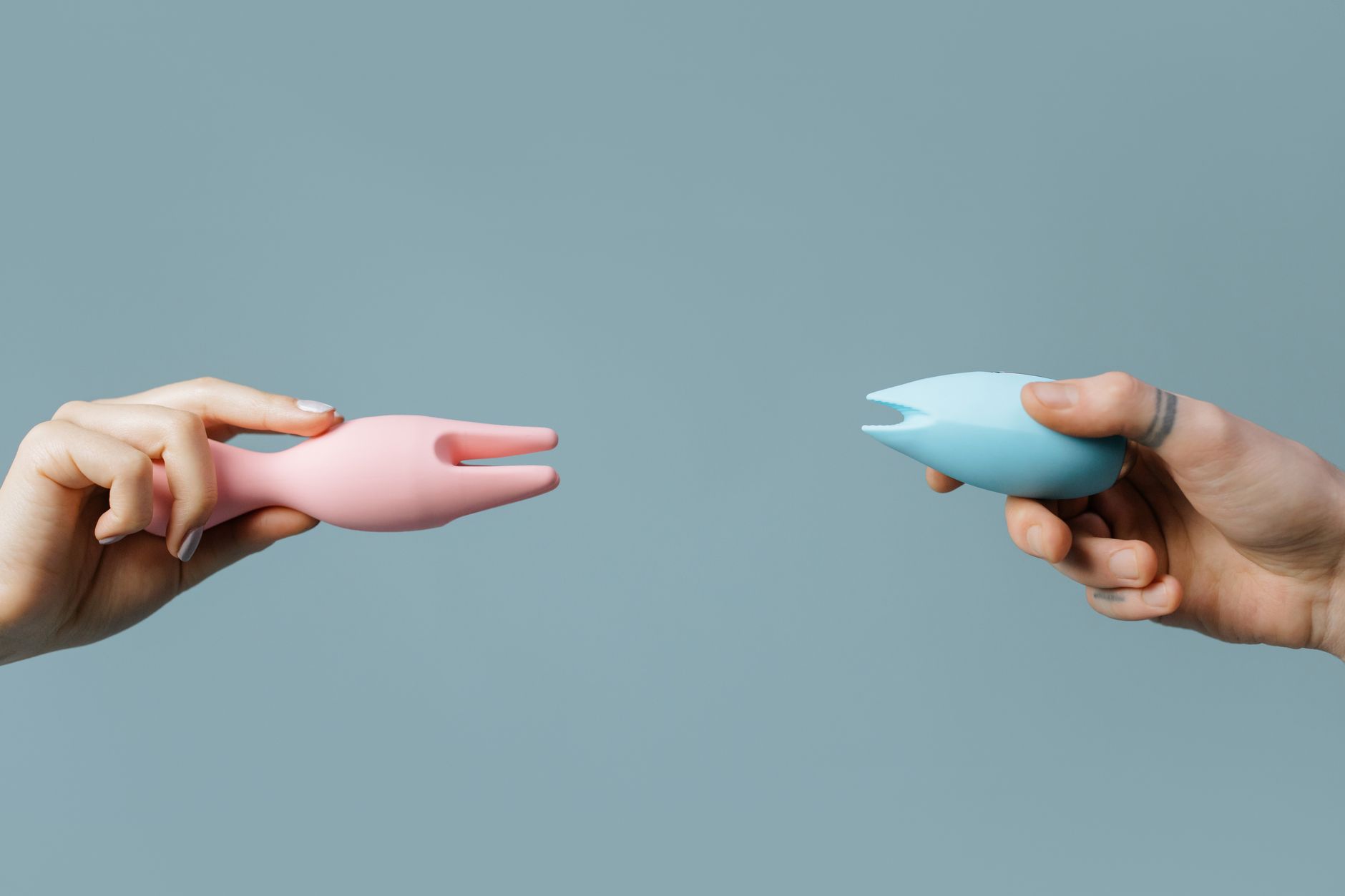
What's actually different between suction and vibration
Honestly, most people think a vibrator is a vibrator. You turn it on, it buzzes, you feel something. But suction and traditional vibration are neurologically different experiences, and your body knows it immediately.
Traditional vibration works by rapid back-and-forth movement. Think of it like tapping really, really fast on a surface. Suction works by creating rhythmic waves of pressure and release. It's more like someone gently pulsing their mouth around you. The nerve endings involved are different. The pressure patterns are different. Your arousal response builds differently too.
How your nervous system reads vibration
When you use a traditional vibrator, the clitoris receives high-frequency stimulation. The nerves that detect this are tuned to rapid movement. This works brilliantly for people whose nervous systems love that kind of staccato input. Fast, consistent, almost percussive.
The sensation is sharp and immediate. You feel it the second the vibrator touches you. For some people, this is perfect. For others, it feels like static noise when you wanted a song.
Traditional vibration also tends to be consistently intense at the point of contact. Every buzz hits the same way. There's no build, no rhythm variation unless the toy has different settings. This predictability is great for some people and, for others, actually numbing over time. The nerves adapt. The sensation that felt amazing on setting 2 for five minutes starts feeling like your phone vibrating in your pocket.
How your nervous system reads suction
Suction works through gentle pressure waves. The clitoris gets stimulated, but not by direct friction or buzzing. Instead, it experiences rhythmic expansion and contraction. The sensation builds with each pulse. It's not constant. It's not sharp. It's textured.
Your nervous system reads this as more like foreplay. There's variation baked into every motion. Your body doesn't habituate to it as quickly because the sensation is never quite the same from one pulse to the next. This is why people with lemon clitoral vibrators often report that sensation stays intense throughout a session, even a long one.
Suction also allows for what I call "layered arousal." Because the sensation isn't so immediate and overwhelming, your mind has space to engage with it. You can focus on your breathing, your partner, the anticipation. This matters more than people realize, especially for anyone whose arousal usually travels through their body rather than arriving at their genitals fully formed.
Direct friction versus pressure waves
Here's a distinction that changes everything. Traditional vibrators create friction. Suction creates pressure. If your clitoral tissue is sensitive, thin, or tender, friction can eventually become uncomfortable. Pressure waves don't.
This is why people who find traditional vibration exhausting, or even slightly painful, often feel completely different with a lemon vibrator. You're not rubbing. You're pulsing. The clitoris swells with each wave and relaxes slightly in the space between. It's rhythm-based rather than mechanical.
Pressure is also why suction works better if you have numbness or reduced sensation. A pressure wave wakes up different nerve pathways than friction does. People recovering from medications that dull sensation, or navigating natural changes in clitoral sensitivity from hormonal shifts, often find suction cuts through what traditional vibration can't quite reach.
Orgasm architecture differs too
The kind of orgasm you build toward changes based on how you're being stimulated. Traditional vibration often leads to faster, more localized orgasms. The clitoris gets amped up, tension builds quickly, release happens in a concentrated burst. This is completely valid and often what people want, especially if you're short on time or have limited energy.
Suction tends to build slower, more spread-out arousal. The pleasure starts at the clitoris but radiates outward. Your whole pelvic floor gets involved. Your legs, your belly, your breath. The orgasm, when it arrives, often feels less like a spark and more like a wave. Longer. Deeper. Different distribution of sensation through your body.
Neither is better. But they're not the same, and pretending they are is why some people think a vibrator just isn't for them, when they've only tried vibration.
Why brand matters (but maybe not how you think)
Lemon sexual toys are designed around suction, specifically because the mechanism is more sophisticated than a buzzer. A decent suction toy requires precise engineering to create those rhythmic waves without feeling sloppy or one-dimensional. Cheaper knockoffs either vibrate (and call it suction) or create a weird sucking sensation that's just uncomfortable.
When you're shopping for a lemon clitoral vibrator, you're not paying for a brand name. You're paying for consistent pressure wave architecture. The difference between a quality suction toy and a gimmicky one is the same difference between a toy that feels like nothing and one that feels like someone knows what they're doing.
Which one should be yours
If you respond well to intensity and like things fast, traditional vibration might be exactly what you need. If you're someone who gets overstimulated easily, prefers layered sensation, or wants something that doesn't wear out your nerve endings, lemon vibrators and suction devices generally outperform.
If you've been struggling with numbness, medication side effects, or age-related changes in sensation, suction almost always works where vibration has failed. If you want something you can use for longer sessions without fatigue, same story.
The practical test is simple. Try both if you can. Spend five minutes with a traditional vibrator and notice what happens. Then try a suction device and notice the difference in how your body reads the sensation. You'll know immediately which your nervous system prefers. Your body doesn't lie about pleasure.
Combining them (the plot twist)
Here's something most people don't consider. You can also use both. Some people use a lemon vibrator for the primary stimulation and then switch to a traditional vibrator for that final push toward orgasm when they want to cross the finish line faster. Others do the opposite, starting with vibration to warm up and then switching to suction for the deeper, longer-lasting sensation.
Your pleasure architecture doesn't have to be either-or. It can be sequenced. Layered. Built in stages. Some days you want quick and sharp. Other days you want slow and textured. Having both in your nightstand means you're matching the tool to your body's actual needs that day, not forcing yourself into what you bought last.
Understanding your own response takes time
Your nervous system isn't static. How you respond to sensation changes across your cycle, with stress levels, with relationship status, even with the time of day. Someone who loves a traditional vibrator in the morning might find lemon clitoral vibrators infinitely more satisfying at night when their body is tired and their mind wants space to wander.
If you're exploring a lemon vibrator together with a partner, this becomes even more interesting. You might discover that what you thought you wanted, and what your body actually responds to, are completely different things. That's worth paying attention to.
The goal isn't to figure out once and for all what the "best" stimulation is. It's to understand your own body well enough to choose what serves you right now. Sometimes that's the sharp, immediate intensity of vibration. Sometimes it's the layered, expanding sensation of suction. Most times, it's knowing the difference and being able to ask for what you actually want.
FAQs about suction versus traditional vibration
Does suction feel like a real mouth?
No, and it shouldn't. A quality lemon vibrator creates pressure waves, but it's not simulating oral sex. It's its own sensation. Some people love it specifically because it's something different, something you can't get from a partner. Others find the sensation resembles oral stimulation enough that it feels intimate in a different way. It's not about realism. It's about sensation.
Can I get numb from using a suction device like a lemon vibrator the same way I do with traditional vibration?
Much less likely. Because suction stimulates through pressure waves rather than rapid vibration, your nerves don't habituate to it as quickly. You can usually use a quality lemon clitoral vibrator for longer sessions without that weird desensitized feeling. That said, anything you use repeatedly will eventually feel less novel. Taking breaks helps.
Why does traditional vibration feel numb or uncomfortable for me?
A few reasons. Your clitoral tissue might be sensitive to direct friction. Your nervous system might not respond well to high-frequency stimulation (some people genuinely don't). You might be expecting immediate intensity and not giving your body time to warm up. Or you're using the wrong tool for your body. Trying suction might change everything.
Will a lemon vibrator work if I've never felt anything from traditional vibrators?
Often yes. Because suction engages different nerve pathways and pressure types, it can create sensation where vibration created nothing. This is especially true if you're navigating numbness from medications, hormonal changes, or age-related shifts. But there's no guarantee. Sometimes the issue is something else entirely, and you might need to talk to a healthcare provider.
Can I use a suction device if I have a very sensitive clitoris?
Yes, usually more comfortably than a traditional vibrator. Because suction doesn't involve direct friction, it's gentler on already-sensitive tissue. You can also usually control the intensity more precisely. Start on a lower setting and work up. Your clitoris will tell you what it needs.
What if I like the intensity of vibration but want the sensation profile of suction?
Try a lemon vibrator on a higher setting. Quality suction devices have multiple intensity levels. You can get pressure waves that feel deeper and more intense as you need them. You don't have to choose between intense and textured. You can have both.
The bottom line
Vibration and suction aren't the same thing. Your body knows this. Stop expecting them to feel the same and start paying attention to which one actually works for you. That's where your answer lives.
If traditional vibrators have left you cold, or numb, or wondering why everyone loves this so much, a lemon clitoral vibrator might be exactly what your nervous system has been asking for. If you love vibration, that's completely valid too. The goal isn't to find the "right" way to feel pleasure. It's to find the way that actually works for your body, so you can finally stop trying to force yourself into someone else's experience.