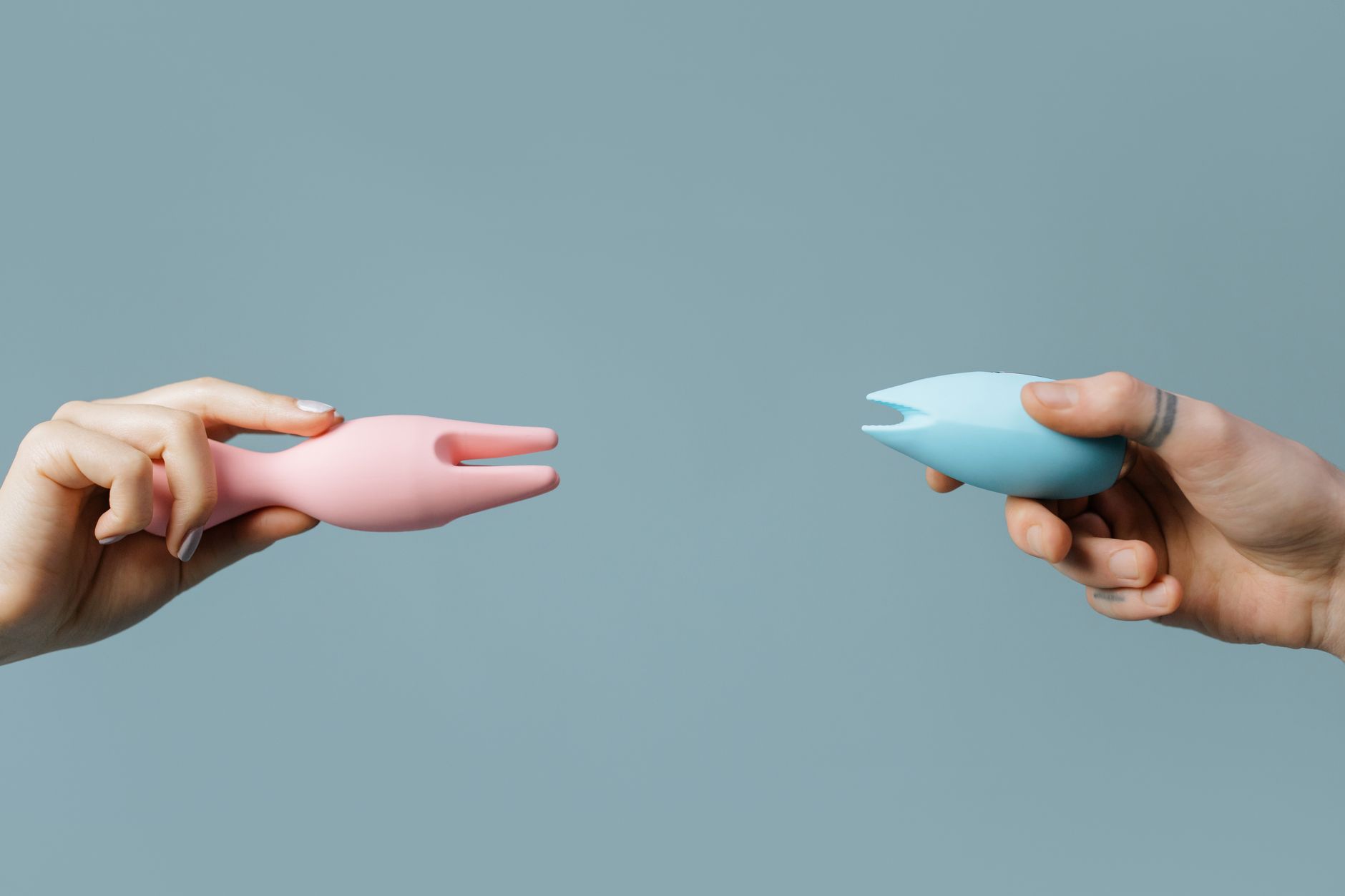
Why your clitoral tissue gets more sensitive when hormones shift
Let's start with the biology. Estrogen does more than control your cycle. It literally determines the thickness and resilience of your clitoral tissue. When estrogen drops, that tissue becomes thinner, more fragile, and way more reactive to pressure.
This happens during specific phases of your cycle, during perimenopause, and sometimes from medication. The clitoris doesn't shrink. But its skin becomes more delicate, almost like the difference between a ripe peach and one that's starting to bruise. The nerve endings are still there. They're still sensitive. But now they're closer to the surface, and direct pressure can feel overwhelming instead of amazing.
That's where most people panic and think their pleasure is breaking down. It's not. Your body is just asking for a different tool.
How traditional vibrators aggravate sensitive tissue
A standard vibrator works by oscillating back and forth at high speed. That's effective when tissue is thick and can handle repeated micro-impacts. But when your clitoral tissue is thin, this constant buzzing creates two problems.
First, it fatigues the nerve endings quickly. The repetitive impact numbs sensation instead of building it. Second, it can cause micro-abrasions on delicate skin. You might not feel pain in the moment, but later you notice rawness or irritation.
Worse, traditional vibration creates a sensation ceiling. Once you've buzzed for a while, you need to crank the intensity higher to feel anything. That becomes a spiral. Higher intensity, more irritation, need even more intensity next time.
Why suction works differently on sensitive clitoral tissue
Lemon vibrators use pneumatic suction instead of traditional vibration. Instead of shaking the tissue, they gently pull it upward, then release. It's a completely different stimulus.
Here's what happens physiologically: suction stimulates the nerves without grinding against the surface. Think of it like the difference between rubbing your skin roughly and cupping your hand over the same spot. Both create sensation, but one is gentler on the tissue.
For sensitive clitoral tissue, suction is superior because it distributes pressure across a larger area. You're not targeting one point with repetitive impacts. You're creating a gentle rhythm of lift and release that engages the whole clitoral body, not just the exposed glans.
This matters because when tissue is thin and reactive, concentrated pressure can feel sharp or overwhelming. Diffuse suction feels more like building sensation without assault.
The clinical evidence (and what it means for you)
Research on air-suction stimulation shows it produces stronger orgasmic response in people with sensitive tissue compared to standard vibrators. One key finding: suction activates different nerve pathways than vibration does. Your brain processes the sensation differently, which means you can experience pleasure even when vibration feels too intense.
Anecdotally, this tracks with what I hear from clients. Women going through perimenopause, those recovering from hormonal medication, and people mid-cycle often report that their lemon vibrators become the tool they actually reach for when other devices start feeling sharp or numbing.
It's not that traditional vibrators are bad. It's that they're asking your sensitive tissue to absorb impact it's not currently equipped to handle. Lemon vibrators work with your hormonal state instead of against it.
When to switch to a lemon vibrator during your cycle
If you have a regular cycle, sensitivity usually peaks twice: about three to five days before your period (when estrogen dips) and for the first couple of days of bleeding. During these windows, your clitoral tissue thins slightly and pressure tolerance drops.
Many people don't notice this until they try their usual vibrator and feel frustrated. Something that normally feels amazing suddenly feels too sharp. That's your body signaling that it needs a gentler approach.
A lemon vibrator on the lowest setting during these sensitive days often produces better results than cranking up a traditional vibrator. You're not fighting your biology. You're matching your tool to your tissue.
For those with irregular cycles or hormonal medication side effects, the signal is simpler: if vibration starts to feel uncomfortable, irritating, or numbing, switch methods. Your tissue is telling you it needs something different.
How to transition from vibration to suction
If you've never used a suction-based lemon vibrator, the first session requires patience. The sensation is unfamiliar, and unfamiliar doesn't automatically feel good. It might feel weird, or too gentle, or like nothing is happening.
Start on the lowest setting. Most people need five to ten minutes of exploration before the sensation clicks. Your brain is learning a new type of input. That takes time.
Second, focus on positioning. With traditional vibrators, you usually press directly against your clitoris. With suction, you're creating an enclosed space. The angle matters more. You might need to adjust until the seal feels right and the sensation registers.
Third, use it with lubrication. Water-based lubricant helps create the seal and adds another layer of comfort. It also prevents the suction from feeling too intense or creating any micro-friction against delicate tissue.
If after ten minutes on the lowest setting you still feel nothing, you might have too much tension in your pelvic floor. Breathe. Relax. Sometimes the block isn't the tool. It's your body bracing against sensation.
Why lemon vibrators become your long-term tool
Here's what happens over time: as you use a lemon clitoral vibrator consistently during sensitive periods, you actually build resilience and sensitivity simultaneously. The suction stimulates nerve regeneration without exhausting the nerve endings. You get better at reading the sensation. Your orgasms often become stronger, not weaker.
This is why so many people find that lemon vibrators outperform every other tool in their collection once they actually get the technique right. It's not about the device being magical. It's about matching the tool to your tissue's actual needs.
Compare this to someone who white-knuckles their way through sensitivity with a traditional vibrator. That person is fighting their body every single month. Over time, they either adapt by needing more and more intensity, or they burn out on pleasure altogether and assume sensitivity equals dysfunction.
It doesn't. Sensitivity just means you need a different tool during certain windows. A lemon vibrator bridges that gap.
The intersection of hormones, medication, and tissue changes
Tissue sensitivity isn't just about natural cycle fluctuations. Birth control, antidepressants, antihistamines, and even stress can shift your estrogen levels and tissue thickness. Perimenopause obviously does. So does recovery from pregnancy.
If you've suddenly noticed that old tools feel uncomfortably intense, the first move isn't to panic about your pleasure capacity. It's to ask: what's changed hormonally? Once you identify the shift, you can match your tool to your current tissue state.
For anyone on long-term hormonal medication, this is especially important. Your sensitivity might be stable at a new baseline. That baseline might be more delicate than pre-medication. A lemon vibrator allows you to explore pleasure at your new tissue state instead of fighting it.
What to do if suction still feels overwhelming
Some people find even the gentlest suction too intense during extreme hormonal shifts. That's not a failure. That's information.
If that's you, the next move is to focus on pelvic floor relaxation and arousal time. A lemon vibrator won't work well if your pelvic floor is braced in protective tension. Spend time on breathing, on fantasies, on non-genital touch. Build arousal fully before introducing any device.
Also consider external massage instead of clitoral contact. Apply the lemon vibrator to the area around your clitoris, the upper thigh, the vulval vestibule. Sometimes indirect stimulation feels better when tissue is extremely sensitive.
And if you're on a medication that's causing severe sensitivity changes, this is worth a conversation with your prescriber. Sometimes a dose adjustment or timing shift helps. Sometimes switching medications helps. Sensitivity doesn't have to be permanent.
FAQ: Lemon vibrators and sensitive tissue
Can I use a lemon vibrator every day when my tissue is sensitive?
Yes, but pay attention to your body. Most people can use a suction-based lemon vibrator daily without irritation because suction doesn't create the micro-abrasions that traditional vibrators sometimes do. However, if you notice any rawness or irritation, take a day off. Pleasure shouldn't require recovery time.
Will switching to a lemon vibrator mean I need lower intensity forever?
No. Suction stimulates sensation differently than vibration. You might find you actually need less intensity with suction because it's more efficient at engaging your nerves. That's a feature, not a bug. As hormone levels stabilize, you might gravitate back toward higher intensity. But many people find they prefer gentler intensity overall once they've experienced how effective suction can be.
Is lemon suction safer for extremely thin tissue?
Suction is gentler than traditional vibration because it avoids repeated mechanical impact. However, for extremely delicate tissue, positioning and pressure still matter. Never suction directly against raw, irritated, or actively inflamed tissue. Focus on surrounding areas and gentler pressure until the tissue heals.
Can hormonal fluctuations make suction feel ineffective?
Yes, sometimes. On days when estrogen is very low and tissue is extremely thin, suction might feel too subtle to register. On those days, the best move is often to focus on mental arousal, foreplay, and external massage. Not every session is the right time for a vibrator, regardless of which type you use.
What if I'm on hormone replacement therapy (HRT)? Will a lemon vibrator still help?
Some people on HRT find sensitivity issues resolve as tissue thickens back up. Others find their sweet spot includes both HRT and gentler stimulation. A lemon vibrator remains useful because suction is just better for sensitive tissue in general. You might find yourself using it less frequently as hormone levels stabilize, but the tool is still helpful.
How is a lemon vibrator different from other suction toys?
Not all suction devices are designed equally. Lemon vibrators use specific pneumatic engineering optimized for clitoral stimulation. The suction strength, pattern frequency, and seal design are calibrated for consistent, intense sensation without harshness. Other suction toys might feel weaker, harder to seal, or less nuanced. Quality matters.
The real conversation about hormones and pleasure
Hormonal shifts don't end your sex life. They change it. Sometimes that change feels frustrating because your old tools stop working the way they used to. Sometimes the change reveals that you've been fighting your body for years and never realized it.
A lemon vibrator isn't a fix-all. But it's a bridge. It's a tool that acknowledges that your tissue has different needs at different times and that meeting those needs isn't compromise. It's smarter sex.
If you've been struggling with sensitivity during certain times of your cycle or after hormonal changes, I'd encourage you to see it not as a sign that pleasure is fading. See it as an invitation to explore differently. Your sensitivity is information. And lemon vibrators are specifically designed to listen to what sensitive tissue is asking for.
If you're curious about exploring suction-based stimulation, start with the lowest setting, use water-based lubricant, give yourself time, and be patient with the learning curve. Most people find that once the technique clicks, they wonder why they didn't switch sooner.