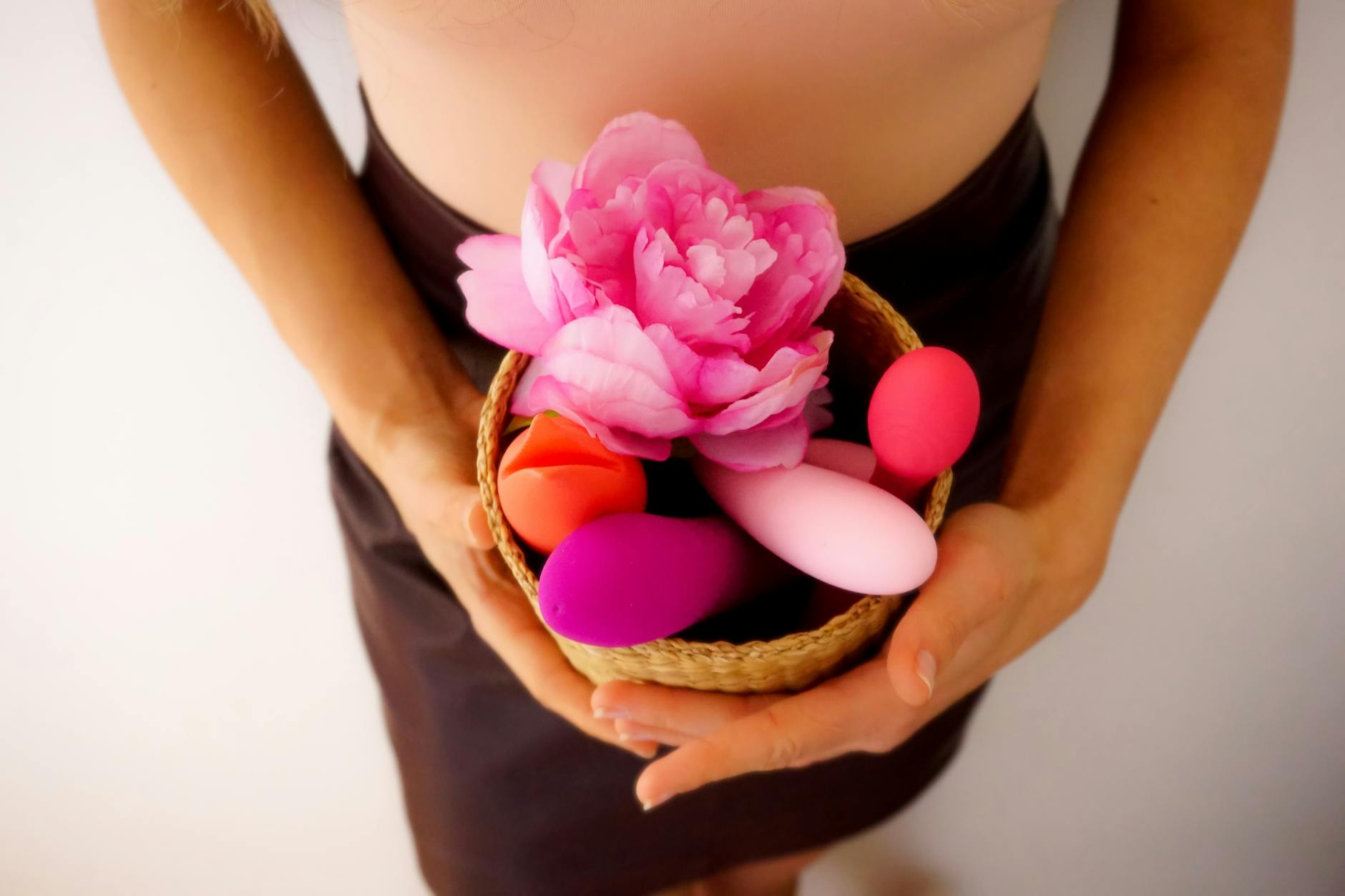
Here's what nobody tells you about hormones and pleasure
Your clitoral sensitivity shifts throughout your cycle. Full stop. Not slightly. Wildly. And if you've ever reached for your favorite lemon clitoral vibrator only to find it feels completely different than last week, you're not imagining it.
I've worked with hundreds of people navigating these shifts, and the honest conversation always starts the same way: "Am I broken? Did something change?" The answer is yes and no. Something absolutely changed. You're not broken.
How hormones actually reshape sensation
Estrogen and progesterone don't just manage your cycle. They rewire your nervous system in ways that directly affect arousal, sensation, and what kind of stimulation feels incredible versus overwhelming.
Here's what's happening physiologically. Estrogen peaks right before ovulation, and during that window, blood flow to the clitoris increases. The tissue swells slightly. Neural pathways fire faster. Everything is more sensitive. A gentle touch that felt pleasant a week earlier suddenly feels like too much. That's not a problem. That's your body telling you it's ready for different input.
Progesterone is the second player. When it rises after ovulation, sensitivity dampens a bit. The arousal process takes longer. What felt intuitive suddenly requires more intention. Many people describe this as flatness or disconnection, but it's actually your nervous system being more conservative. It takes longer to build, but the intensity can be deeper once it does.
Why lemon vibrators adapt better than you'd expect
Most vibrators are designed with one intensity curve. Go or no-go. But lemon-shaped clitoral vibrators, particularly air-suction designs like the Lem vibrator, work differently. The suction mechanism stimulates nerve clusters without relying solely on direct vibration intensity. This matters when your sensitivity is in flux.
During high-estrogen phases, you can lower the suction setting and still get powerful sensation because you're not depending on frequency alone. During phases when sensitivity drops, you can increase the intensity gradually without the sharp overstimulation that rigid vibration patterns can create.
I've watched people cycle through three or four vibrators trying to find "the right one" when actually their body needed a tool that could flex with their hormonal reality. Lemon vibrators handle that flexibility.
The monthly rhythm you need to know
Week one after your period starts, estrogen is low. Arousal takes patience. Foreplay should be longer. If you're using a clitoral vibrator at all, start on the lowest setting and work up. Your nervous system is conservative right now, and that's not weakness.
Week two, estrogen climbs. This is your high-sensitivity window. Everything feels more. Orgasms can come faster. You might actually prefer the Lem vibrator at intensity levels that would have felt aggressive two weeks ago. This isn't about more being better. It's about matching your tool to your current neurological state.
Week three, progesterone rises and estrogen drops. You're in the plateau phase. Arousal takes longer, but satisfaction can be more sustained once you're there. You need more warm-up time, more consistent stimulation, less of the on-off pattern. This is when lemon clitoral vibrators shine because you can hold a steady rhythm at whatever intensity level keeps you in the building phase without overshooting to discomfort.
Week four, both hormones drop. Sensitivity is at its lowest. Desire might feel distant. If you're using a vibrator, you're looking for something that doesn't require a ton of physical sensation to work. Quality of sensation matters more than intensity.
What changes beyond just sensitivity
It's not only about feeling more or less. The type of sensation that works changes too. During high-estrogen phases, direct stimulation and speed feel incredible. During lower-estrogen phases, slower pulsing patterns and broader contact often work better than pinpoint vibration.
There's also a mental component that shifts with hormones. During high-estrogen phases, many people report feeling more confident, more in their body, less self-conscious about their own pleasure. That psychological shift is real and matters as much as the physical sensation.
Progesterone, conversely, can bring a need for more emotional intimacy before pleasure kicks in. If you're with a partner, this is huge information. It's not that you don't want them anymore. Your nervous system is asking for connection before speed.
How to work with these shifts instead of against them
First: track it. Not obsessively, but notice. When does arousal feel easy? When does it feel like friction? When does your preferred vibrator setting change? A simple calendar marking high-sensitivity and low-sensitivity phases gives you permission to adjust without shame.
Second: change your approach with the rhythm, not against it. If you're in a low-sensitivity week and you're reaching for the same intensity you loved last week, you're setting yourself up for frustration. Lemon vibrators give you that control, but only if you actually use it.
Third: talk about it if you're partnered. "I'm in a week where I need more warm-up time" is information. It's not rejection. It's specificity. Partners who understand hormonal cycles stop taking sensation changes personally.
Fourth: don't assume your body broke because something changed. The most common mistake I see is people abandoning tools they love because they feel different mid-cycle. Nothing is broken. Your sensitivity landscape shifted, and your tools need to flex with it.
Lube, timing, and everything else
Lubricant changes throughout your cycle too. During high-estrogen phases, your body makes more natural lubrication. During lower phases, adding water-based lube isn't a sign of dysfunction. It's smart adaptation. Same with timing. If arousal takes 25 minutes in week three instead of 8 minutes in week two, that's not slower. That's your nervous system having different chemistry.
Some people find that the sensation of a lemon clitoral vibrator is best during specific phases. That's real data, not weakness. It's your body telling you what works when.
Photo by Madison Inouye on Pexels
The long game: pleasure doesn't stay static
Something I want to be clear about: these shifts are normal, cyclical, and completely workable once you understand them. You don't need a different vibrator. You need permission to adjust your expectations and approach with your actual physiology instead of treating every week the same.
The Lem vibrator and similar lemon-shaped designs work well across hormonal variation because they're not locked into a single intensity experience. You're in control. That matters when your body's requirements are shifting.
If you want deeper guidance on understanding your personal cycle and what works best for you, the complete guide to lemon vibrators breaks down how different designs respond to varying sensitivity levels throughout the month.
Frequently asked questions
Why does my vibrator feel painful during certain weeks?
Your clitoral tissue thickens and sensitivity increases during high-estrogen phases. What felt gentle before can feel sharp. This is normal. Either lower the intensity setting or take a break from direct stimulation during that window. Some people prefer external massage patterns (like suction from a lemon clitoral vibrator) during these phases because it stimulates nerves without the same piercing sensation that rigid vibration creates.
Can hormonal birth control change how pleasure works?
Absolutely. Hormonal contraceptives suppress the natural hormone cycle, which means you might not experience the dramatic monthly shifts. Some people report flatter sensation overall. Others find consistent pleasure without the monthly ups and downs. If you're on hormonal birth control and pleasure feels muted, that's worth talking about with your doctor. It might be the formulation, the dosage, or it might be something else entirely. Don't assume it's permanent.
Is it normal for arousal to take longer mid-cycle?
Completely normal. Progesterone rises after ovulation, and one of its effects is slowing the arousal cascade. Your nervous system isn't broken. It just needs more sustained input before it builds to peak. This is why lemon vibrators that let you adjust intensity and pattern gradually are helpful. You're matching the tool to the actual arousal timeline your body is running.
What if I'm using hormonal birth control and nothing feels good anymore?
First: it might be the hormonal contraception. Some formulations genuinely mute sensation or desire. That's not in your head. Second: it might be something emotional or relational that has nothing to do with hormones. Third: it might be that you need a different approach to stimulation altogether. The variable here is too large for one answer. Talk to your gynecologist and consider working with a therapist who specializes in sexuality if the issue persists. Sometimes it's physiology. Sometimes it's psychology. Often it's both.
Does the Lem vibrator work better during specific cycle phases?
The Lem vibrator adapts across cycle phases because you control the suction intensity and rhythm. During high-sensitivity windows, lower settings give you the intensity you need. During lower-sensitivity phases, higher settings don't create the sharp overstimulation that fixed-frequency vibrators sometimes do. It's flexibility that matters, not a vibrator that works only one way.
How do I know if hormones are affecting my pleasure or if something else is wrong?
Track it. Notice when sensation feels different, when arousal takes longer, when your preferred intensity changes. If those changes follow your cycle, hormones are a major player. If the changes don't match your cycle at all, or if pleasure has disappeared entirely and isn't cycling back, that's a sign to talk to a healthcare provider. They can rule out medical factors, medication side effects, or other issues that aren't hormonal.
The bottom line
Your sensitivity isn't broken. It's cycling. Your favorite lemon clitoral vibrator isn't less effective. Your body's requirements shifted. Once you understand that your pleasure is supposed to change throughout the month, you stop fighting your physiology and start working with it. That's when things get actually good.