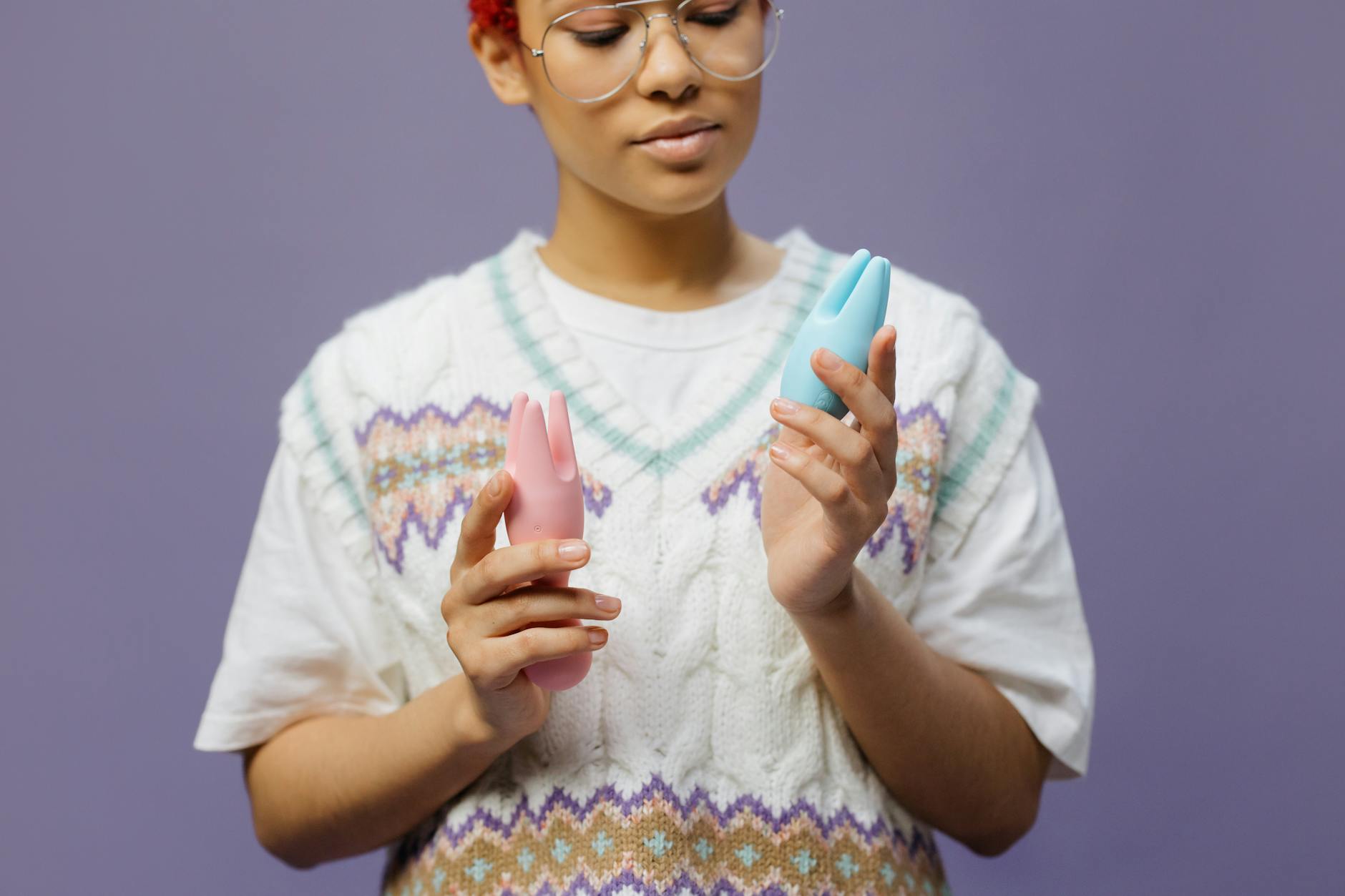
Something shifts, and you'll notice it
You're using the same lemon vibrator you've always used. Same settings. Same routine. But something feels off. Maybe duller. Maybe more intense. Maybe arousal takes longer to build, or your orgasms feel subtly different. You're not imagining it. Your 30s bring real physiological changes that affect how clitoral vibrators feel.
This isn't decline. It's recalibration.
The hormonal reality of your 30s
Women in their 30s sit in a weird middle ground hormonally. Your estrogen is still reasonably stable, but your cycle often becomes more irregular than it was in your 20s. Progesterone fluctuations can be sharper. And testosterone, which directly influences clitoral sensitivity and desire, starts a slow decline that most people don't notice yet but your body registers.
Here's what this means on a tissue level. The clitoris has about 8,000 nerve endings, and they're exquisitely sensitive to hormonal shifts. When testosterone dips even slightly, those nerves respond less quickly to stimulation. Blood flow to the genital area can fluctuate across your cycle too, which changes how engorged your clitoris becomes during arousal. Less engorgement means less sensitivity.
Add stress, irregular sleep, and the particular life pressures of your 30s, and you've got a system that's fundamentally more variable than it was at 25.
Why sensation changes with a lemon clitoral vibrator
Lemon vibrators, including the suction-style designs like the lem vibrator, work by creating a gentle seal and pulsing sensation that stimulates without direct friction. This design is brilliant for many bodies, but it's also sensitive to how much tissue engorgement is happening. If your clitoris isn't as engorged as it usually is, the seal won't feel as intense.
This is why you might notice that pattern 2 on your lemon vibrator feels like pattern 3 used to feel. You're not losing sensitivity. Your tissue state is different.
Stress, caffeine intake, hydration, and where you are in your cycle all affect clitoral engorgement. In your 30s, you're probably juggling more of these variables than you were in your 20s. Work stress impacts arousal more than most people admit. Sleep deprivation dampens sensitivity. Dehydration reduces blood flow. Cycle irregularity means you can't predict which days your body feels most responsive.
The sensation timeline across your cycle
Most people in their 30s experience a noticeable peak around ovulation when testosterone spikes and estrogen is high. That's when lemon vibrators typically feel most intense and orgasms arrive fastest. The week after ovulation, sensation often flattens. Right before your period, you might feel extra sensitive (which some find enjoyable, others find overwhelming).
If your cycle is less predictable, you're essentially guessing where you are. Which means you might reach for your lem vibrator expecting the intensity of a peak ovulation day and get the muted response of the luteal phase instead.
Track it for two months if this resonates. Note which days feel most responsive and which feel sluggish. You'll start to see the pattern, and you'll stop blaming yourself for a "problem" that's just the reality of having a cycling body.
Blood flow and arousal time
In your 20s, many people could go from zero to aroused in five minutes. By your 30s, especially if you're managing stress or relationship complexity, arousal takes longer. This isn't dysfunction. This is normal. And it's one of the biggest reasons people think their lemon vibrators have "stopped working."
Blood flow to genital tissue is finite. Your body prioritizes based on where you're directing attention and what stress load you're carrying. If you're mentally distracted, your body won't send blood where you need it. If you're stressed, your nervous system is in sympathetic mode, which literally restricts blood vessel dilation in your genitals.
The fix isn't a new vibrator. It's longer warm-up. Give yourself 15 to 25 minutes of foreplay, mental focus, or solo attention before you introduce the lemon vibrator. Let arousal build naturally first. Your clitoris will engorge more fully, and the sensation will feel like what you remember.
Photo by cottonbro studio on Pexels
What changes with lube and lubrication
Your 30s often bring shifts in natural lubrication too. If you're on hormonal birth control, that can reduce natural wetness. If you're off it, your lubrication will vary across your cycle. Stress and certain medications reduce it. Dehydration reduces it.
Lubrication and clitoral sensitivity aren't the same thing, but they're related. A well-lubricated vulva allows sensation to transmit more cleanly. A dry vulva can feel uncomfortable or numb. This is why I often recommend that people use lube even if they produce natural lubrication. It's not a sign of anything wrong. It's a tool for clarity.
Water-based lubricant is the safest choice with lemon vibrators because silicone-based lubes can degrade silicone toys over time. Apply generously and reapply if sensation dulls during a longer session. You might find that lube alone brings back the intensity you're missing.
Stress and nervous system state
This is the part most people skip over. Your 30s often come with more stress than your 20s. More career stakes. More relationship complexity. More financial pressure. More family responsibility. All of that matters for pleasure.
When your nervous system is in sympathetic dominance (fight-or-flight), your body restricts blood flow, tightens muscles, and makes it harder to reach arousal. You can use a lemon vibrator perfectly and feel almost nothing because your system isn't in a state where sensation can land.
If you're noticing a change in how your clitoral vibrator feels, audit your stress levels. Are you sleeping less? Working more? Scrolling more? Taking time to rest your nervous system? Five minutes of deep breathing before you touch yourself isn't woo. It's physiology. It allows blood to flow where you need it.
Cycle tracking and predictability
Many people in their 30s have more irregular cycles than they did in their 20s. PCOS, thyroid shifts, stress, and just the natural variation of aging can all contribute. If your cycle is less predictable, your body's responsiveness will be less predictable too.
This is actually useful information. Rather than assume your lemon vibrator isn't working, start tracking. Use an app. Note energy levels, how quickly you become aroused, which patterns on your vibrator feel best. Within a couple months, you'll see when your body is most responsive and plan accordingly.
When to adjust your technique
If you've used the same patterns on your lemon vibrator for years, your 30s might be the time to explore. Start lower. Maybe you've always gone straight to pattern 5, but now pattern 3 feels better with longer duration. Maybe you need to shift position to change the angle of the seal. Maybe you need more time with the vibrator off, building sensation without it.
Your body isn't broken. It's inviting you to get curious again.
The role of relationship and mental state
If you're in a partnership, relationship dynamics in your 30s shift. Early-relationship intensity fades. Routine can numb sensation. If you're solo, you might be navigating different emotional territory than you were in your 20s. All of this affects pleasure.
Sensation isn't just physical. It's linked to how present you are, how desired you feel, how much you're allowing yourself to focus. Women in their 30s often carry mental load that makes genuine presence harder. Kids, aging parents, work, finances, household management. Even if none of that is actively happening during a solo session, your nervous system is carrying it.
This is where slowing down helps more than intensity ever could.
Simple adjustments that work
Start with these four changes and see what shifts. First, extend your warm-up time to 20 minutes minimum before you use the lemon vibrator. Let your body actually become aroused. Second, use water-based lubricant generously, even if you produce natural wetness. Third, check your stress and sleep. One week of better sleep often transforms sensation more than a new toy would. Fourth, track your cycle if it's irregular. Know when your body is naturally more responsive and plan accordingly.
These aren't substitutes for a new vibrator. They're usually more effective than one.
FAQ: Why Your Lemon Vibrator Feels Different in Your 30s
Does using a lemon vibrator less often make sensation stronger when I do use it?
Not necessarily, and this is a common misconception. Taking breaks from any vibrator doesn't "reset" your sensitivity. What matters more is what's happening with blood flow, hormones, and stress during the break. Someone who takes a week off while managing high stress will notice dullness. Someone who takes a week off while well-rested and relaxed might notice the opposite. Focus on the underlying physiology, not the break itself.
Can birth control pills change how a lemon clitoral vibrator feels?
Absolutely. Hormonal birth control stabilizes your cycle, which is great for predictability, but it also suppresses the testosterone spike that most people experience around ovulation. This is why people on hormonal birth control often report that sensation feels consistently milder than it did off the pill. It's not your imagination. The trade-off is usually worth it, but it's real.
Should I switch vibrators or adjust my technique?
Adjust your technique first. Switch the vibrator only if you've truly explored your current one across different settings, positions, and arousal states. Most people find that a different pattern or longer warm-up time solves the problem. If you've genuinely tried everything and sensation remains dull, then a different toy design might help. But most of the time, it's about how you're using the tool, not the tool itself.
Why does my lemon vibrator feel intense some days and barely noticeable other days?
You're likely experiencing normal cycle variation combined with stress and sleep fluctuation. High-stress days with poor sleep almost always result in duller sensation, regardless of where you are in your cycle. Ovulation days almost always feel more responsive. If you're getting wildly inconsistent results, start tracking sleep, stress, and cycle position. You'll see the correlation.
Is it normal for orgasms to feel different in your 30s?
Completely normal. Orgasms can change in intensity, duration, and quality as you age and as your hormones shift. They might feel more localized in your 30s or slightly less intense than in your 20s. This doesn't mean they're worse. Many people report that they actually prefer how their orgasms feel in their 30s once they stop comparing them to their 20s. Different isn't worse.
Can I use the lem vibrator or other lemon vibrators differently to compensate for less sensation?
Yes. Try longer sessions at lower patterns instead of shorter sessions at higher patterns. Experiment with different angles. Use more generous lubrication. Combine it with other forms of stimulation like manual touch or penetration. Some people find that suction-style lemon vibrators feel better with consistent pressure rather than pulsing patterns. Play around. Your 30s are a good time to get curious about your body again.
The bigger picture
Your 30s bring real physiological shifts. Blood flow changes. Hormones fluctuate. Your cycle might become less predictable. Stress often increases. Sleep often decreases. All of this affects how your body responds to pleasure, including how lemon vibrators and other clitoral vibrators feel.
This isn't a problem to solve with a new toy. It's an invitation to understand your body more deeply. Track your cycle. Prioritize sleep. Manage stress. Extend your warm-up time. Use lube. Adjust your patterns. Get curious about what your body needs now, not what it needed at 25.
Your pleasure matters just as much in your 30s as it did in your 20s. It just requires a slightly different approach. And that's not a step backward. It's a step forward.