Let's cut right to it
If your lemon vibrator hurts, something is off. Not with you. With how you're using it, your body right now, or possibly the device itself. The good news? Pain during clitoral stimulation is one of the easiest friction points to solve once you know what's actually happening.
I've worked with hundreds of people navigating this exact issue. In almost every case, the fix is straightforward. By the end of this, you'll know exactly what's causing the discomfort and what to do about it.
The most common reason: starting intensity too high
Here's the thing about lemon clitoral vibrators like the Lem. The suction mechanism is powerful. If you turn it on at pattern 5 or 6 right out of the gate on sensitive tissue, your body will tell you no. That's not a design flaw. That's your nervous system working correctly.
The clitoris has roughly 8,000 nerve endings concentrated in a tiny area. When you bombard that space with maximum suction and no warm-up, you're not building pleasure. You're creating friction and overstimulation.
Start with pattern 1 or 2. Seriously. I know it feels weak compared to where you think you want to be, but weak stimulation on the right spot is infinitely better than intense stimulation in a way your body resists. Spend 2-3 minutes there. Let arousal build naturally. Then move up.
Most people who say a lemon vibrator hurts are actually using it at an intensity level their body isn't ready for yet. Dial it down first, then troubleshoot from there.
Not enough lubrication or arousal time
Your clitoris needs blood flow and lubrication before you introduce suction. If you're diving straight into a lemon vibrator without adequate warm-up, the tissue is thin and dry. That creates friction and sensitivity.
Give yourself real foreplay time. I mean at least 10-15 minutes of manual stimulation, partner touch, or just mental arousal before introducing any device. Your body needs time to engorge and produce natural lubrication.
If natural lubrication isn't happening (which is completely normal some days), add water-based lube. This isn't a failure. It's logistics. The Lem works better with light lube anyway because it reduces direct friction while keeping the suction sensation intact.
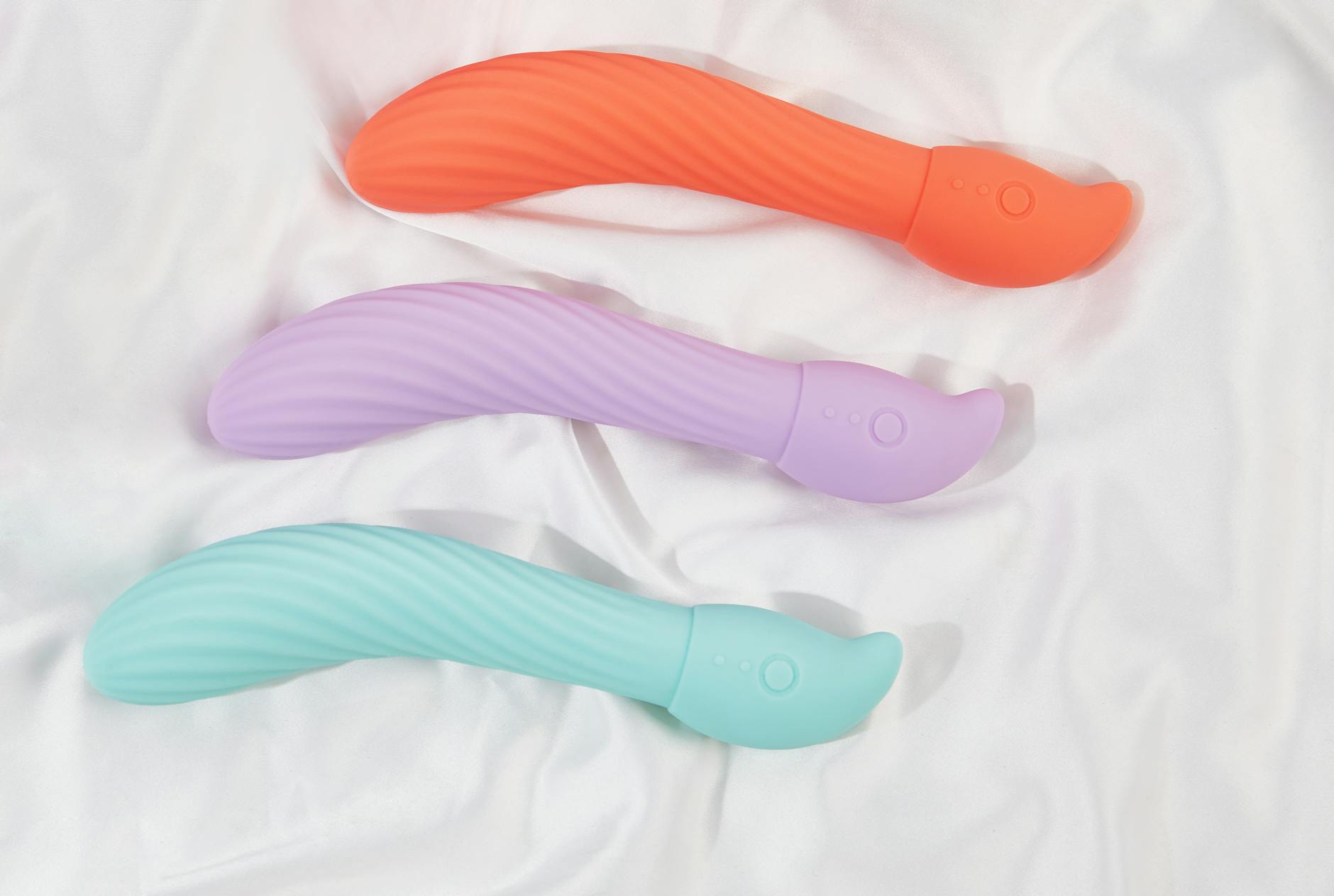
Photo by IFONNX Toys on Pexels
Tension in your pelvic floor
This one catches people off guard because they don't realize it's happening. When you're nervous, stressed, or just naturally guard against discomfort, your pelvic floor tenses up. A tight pelvic floor makes the clitoris less accessible and more sensitive to pressure.
When you use a lemon vibrator with a clenched pelvic floor, you're essentially trying to stimulate tissue that's already under tension. That equals pain or discomfort.
Before you use any clitoral vibrator, take 30 seconds to consciously relax your pelvic floor. Breathe into your belly. Unclench your thighs. Some people find it helpful to do a few slow Kegel releases (squeezing and releasing, instead of just squeezing) to remind the pelvic floor what relaxation feels like.
This single adjustment fixes pain for way more people than realize it's the issue.
Your sensitivity is actually normal (and changeable)
Some people have more sensitive clitorises than others. That's genetics, nerve density, and hormonal history all mixed together. If you've always been sensitive to direct touch, a lemon vibrator might overshoot your comfort zone faster than other devices.
That doesn't mean you can't use one. It means you have options. You can use it on lower patterns, you can use it on adjacent areas (the labia or pubic mound) instead of the glans directly, or you can cover the tip with a thin fabric to diffuse the sensation slightly.
Sensitivity also fluctuates with your cycle, stress levels, and hormonal changes. If you're noticing that certain times of the month cause more discomfort, track when you use it and how it feels. You might find a pattern that tells you when your body needs gentler settings.
When pain signals something actually wrong
If you've adjusted intensity, warmed up properly, relaxed your pelvic floor, and it still hurts, there might be an underlying issue worth checking out.
Pain during stimulation can sometimes signal inflammation, infection, or a skin condition like contact dermatitis. If the pain is sharp, burning, or persistent even at the lowest settings, see a gynecologist. There's no shame in that. Your doctor has heard this before.
Genitourinary syndrome of menopause (GSM) is another common culprit, especially if you're in perimenopause or menopause. The tissue becomes thinner and more fragile. In that case, topical estrogen creams often help dramatically, and understanding how hormonal changes affect sensation can be genuinely transformative.
The actual technique that makes the difference
Once you've covered the basics, here's the hands-on approach that works.
Start with the device off. Hold it against your body and find the exact spot where the sensation feels best. Not the most intense. The best. That's usually somewhere slightly to the side of the clitoral glans, not dead center.
Turn it on at pattern 1. Don't move it. Let the suction work for 20-30 seconds. Notice what you feel. Then move to pattern 2 and repeat.
You're not supposed to be ramming a lemon vibrator around or pressing hard. The suction does the work. Your job is to hold it steady and let your arousal build. Pressing harder doesn't feel better. It actually deadens sensation.
Once you find your sweet spot and your favorite pattern, you can explore. But the foundation is gentle contact, low intensity, and patience.
The warmth factor people don't mention
Your body is warm. A vibrator at room temperature feels shocking and can increase sensitivity in ways that aren't pleasant. Before you use a lemon vibrator, hold it in your hands for 20-30 seconds to warm it up slightly.
This sounds ridiculous until you try it and suddenly the experience shifts from uncomfortable to actually good. Temperature matters more than most people realize.
FAQ: Why does my clitoral vibrator hurt?
Can using a lemon vibrator too much make it painful?
Yes. Overuse can create irritation, similar to chafing. If you're using a clitoral vibrator for extended periods daily, you might need to ease back on frequency. Check out how often you should actually be using a lemon vibrator to find a rhythm that works for your body. Most people do best with 3-4 times per week, not daily.
Is the pain because I'm using it wrong?
Most likely, yes. The majority of people who experience pain are starting at too high an intensity, not warming up long enough, or tensing their pelvic floor without realizing it. Those three factors account for about 80 percent of reported discomfort. Adjust those and reassess.
Does this mean I should switch to a different vibrator?
Not necessarily. Before you abandon your lemon vibrator, try the intensity and warm-up adjustments outlined here. A lot of people think they need a "gentler" device when what they actually need is a different approach. That said, if you're still uncomfortable after trying lower patterns, exploring different clitoral vibrator options might be worth it. Every body is different.
Can my partner help if using a lemon vibrator hurts?
Absolutely. Partners can help with warm-up, remind you to start low, and take pressure off by handling the device while you focus on relaxation. If you're using it together, communication is key. Let them know what intensity feels good and what doesn't. Using a lemon vibrator with a partner often feels better than solo use because you can focus on sensation instead of logistics.
What if pain only happens sometimes?
That's a sign that something external is changing. Hormones, stress, whether you've eaten, how aroused you are going in, pelvic floor tension. These all shift. If pain is intermittent, start a note noting what was different on painful days versus comfortable days. You'll usually spot a pattern pretty fast. It's rarely the device. It's usually your body signaling what it needs that day.
Should I use numbing creams if my clitoral vibrator hurts?
No. Numbing the area masks the problem instead of fixing it. Pain is information. If it hurts, your body is telling you something needs to change about how you're approaching it. Listen to that signal and adjust. Don't silence it.
The bottom line
Pain during pleasure isn't something you have to live with or work around. It's a fixable problem. Start low, warm up longer, breathe, and relax. Nine times out of ten, that's all it takes.
Your body deserves pleasure that actually feels good, not something you're white-knuckling through. If the adjustments here don't help, reach out to a sex-positive gynecologist. Your doctor is there to help, not judge.
You've got this. Your pleasure matters, and so does your comfort.