
Here's what nobody tells you about pleasure after trauma or birth
Your body isn't broken. It's protecting itself. After childbirth, sexual trauma, or even prolonged pelvic tension, the tissue around your clitoris becomes hypersensitive to vibration. Direct buzzing can feel sharp, almost electrical, instead of pleasurable. Many people try their old vibrators, feel that sting, and assume they've lost sensation forever. They haven't. They've just outgrown vibration as a tool.
That's where lemon vibrators, which use suction instead of buzzing, change everything.
Why traditional vibration stings after tissue trauma
When you experience birth trauma, sexual trauma, or extended pelvic floor tension, a few things happen at the cellular level. Scar tissue forms in micro-layers. Nerve endings that were damaged during the trauma become hypersensitive as they heal. Inflammation can persist for months, even after the visible wound closes. The tissue itself gets thinner and more fragile because of reduced blood flow.
Trad vibrators work by creating rapid side-to-side movement against tissue. On healthy, well-lubricated, well-vascularized tissue, that feels amazing. On traumatized tissue, it feels like someone's snapping a rubber band against your skin. The nerve endings are firing, but they're firing in pain rather than pleasure.
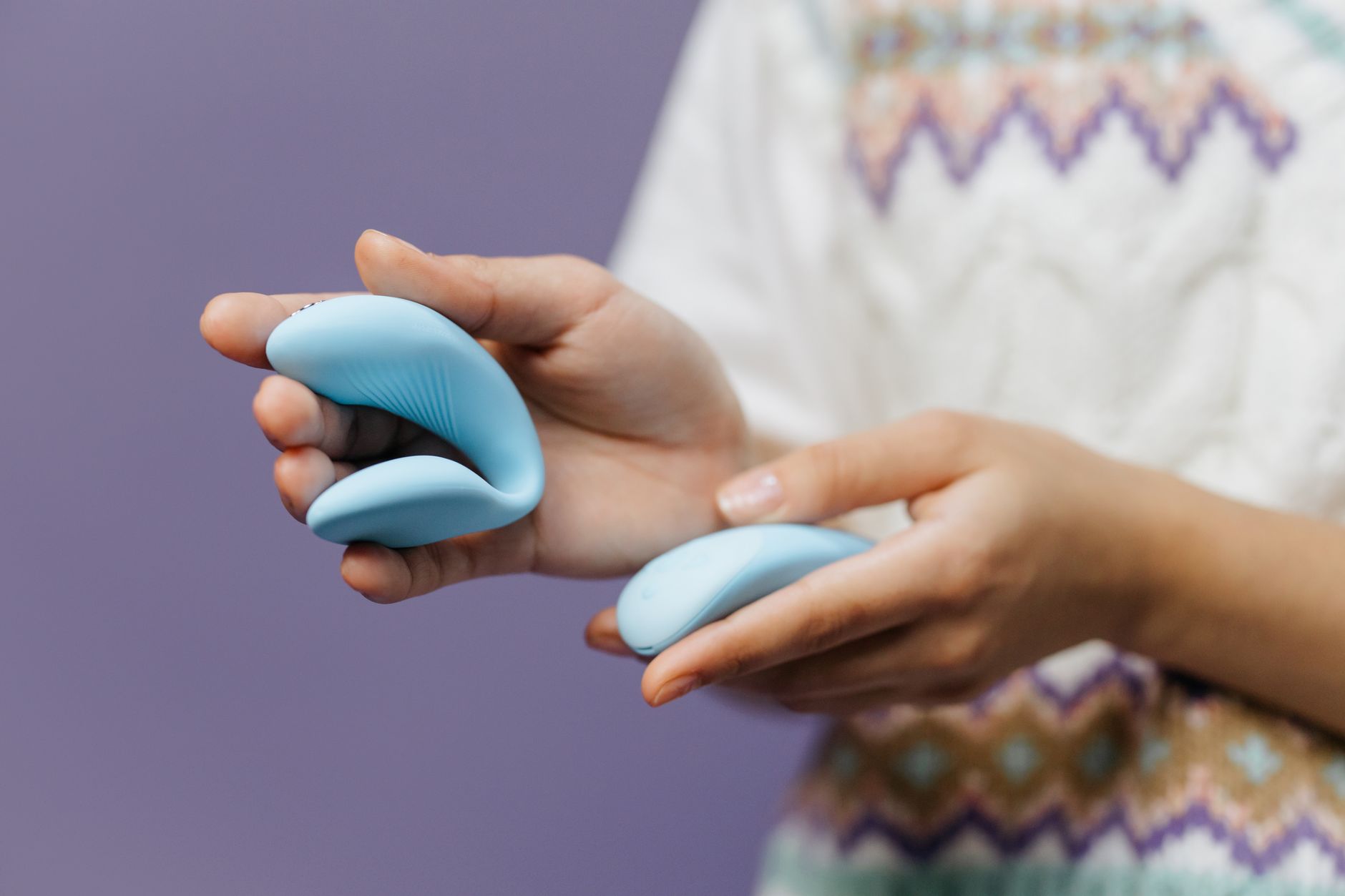
Photo by cottonbro studio on Pexels
A lemon clitoral vibrator works differently. Instead of vibrating, it creates gentle waves of suction. Think of it less like buzzing and more like rhythmic gentle pulling. That suction stimulates the same nerve clusters, but without the mechanical friction that irritates healing or sensitized tissue.
How suction wakes up numbed nerves without causing pain
After trauma, many people report that their clitoris feels almost numb or disconnected. The nerve endings aren't dead. They're just in protective overdrive, filtering out sensation to prevent re-injury. Suction is particularly effective for this because it works on the entire clitoral body, not just the surface.
Your clitoris isn't just the small visible part. It's a complex internal structure that extends several inches inside your body. Traditional vibrators mostly stimulate the surface. Lemon vibrators and other air-suction toys create a gentle pressure wave that reaches deeper nerve clusters without that surface irritation.
People who've tried this transition often say the same thing: "It's like my body finally feels safe enough to respond again." That's not placebo. That's your nervous system recognizing that this stimulation doesn't come with the sharp, wounding sensation that made it shut down in the first place.
The difference between suction intensity and vibration intensity
Here's a critical distinction that most sex toy guides skip. A lemon vibrator at pattern 3 does not feel like a traditional vibrator at pattern 3. Suction creates a different sensory signature entirely. It's less agitating, more encompassing. The intensity in a lemon vibrator is measured by the gentleness and rhythm of the suction, not by how fast something is buzzing.
For someone healing from trauma or birth, this matters enormously. You can start at a much lower "intensity" on a lemon clitoral vibrator and still get meaningful sensation. You're not choosing between "way too strong" and "nothing at all." The range of gentle sensation is much wider.
Many people starting with suction toys after trauma actually find they can progress faster than they expected, precisely because they're not fighting through pain on their way to pleasure.
When to start and how to time it right
If you're recovering from childbirth, most medical guidance suggests waiting 4-6 weeks for vaginal tissue to heal, and checking in with your OB-GYN before reintroducing any stimulation. After sexual trauma, there's no set timeline. Your nervous system heals on its own schedule, and forcing sensation before your body feels genuinely safe will only extend the protective shutdown.
How do you know you're ready? A few signs: you can be touched in that area without flinching. You can imagine pleasure without immediately tensing. You're curious rather than fearful. You're not in active pain.
When you do start, approach lemon vibrators like you're learning touch for the first time. Spend a few sessions just holding it, feeling its shape against you without turning it on. Then start with the lowest suction setting, 30 seconds at a time. You're not trying to have an orgasm. You're just reacquainting your nervous system with the idea that this area can feel good.
Photo by FounderTips on Pexels
The role of lubrication and patience
After trauma or birth, the tissue produces less natural lubrication and is often more sensitive to friction. A water-based lube becomes non-negotiable, not optional. It creates a barrier that reduces irritation while still allowing sensation to come through.
Lobe your generosity with lube. More than you think you need. Reapply between sessions. Your body is still learning that pleasure can happen here, and friction is the enemy of that learning.
Patience also means not pushing for progression. If pattern 2 feels good, stay there for three sessions before trying pattern 3. If solo exploration feels manageable but partner touch doesn't yet, that's completely normal and worth honoring. Rebuilding sensation is not a race.
When to reach out for professional support
If you're several weeks into gentle exploration and you're still experiencing sharp pain, persistent numbness, or severe anxiety around the area, talk to a trauma-informed pelvic physical therapist. Sometimes scar tissue needs hands-on release. Sometimes the protective shutdown is deeper than self-exploration can reach alone. That's not failure. That's wisdom.
A good pelvic PT can help you understand exactly what tissue needs what kind of touch, and can often provide techniques to combine with tools like lemon vibrators for faster healing.
If you're healing from sexual trauma specifically, a therapist trained in somatic experiencing or EMDR can help rewire the nervous system response that's keeping you in protection mode. Sensation tools alone won't fix trauma. They're one part of a larger healing practice.
The long game: rebuilding your relationship with pleasure
Lemon vibrators aren't a magic fix. They're a tool that matches where your body actually is right now, rather than forcing it into a shape it's not ready for. By using suction instead of vibration, by creating sensation without aggravating tissue, they let your nervous system gradually remember that this area of your body can be a source of joy rather than fear.
Many of my clients find that starting with suction after trauma actually opens doors to more nuanced, sustained pleasure down the line. Because they've rebuilt sensation slowly and safely, without pushing through pain, their brain doesn't associate that area with harm anymore. When they eventually feel ready to try other sensations, they do so from a place of genuine curiosity rather than obligation or fear.
Your timeline is yours. Your body's way of healing is smart. And tools that work with your body's current needs, rather than against them, make all the difference.
People also ask
How long after birth can I use a lemon vibrator?
Most healthcare providers recommend waiting 4-6 weeks postpartum before introducing any internal or external stimulation, and checking in with your OB-GYN first. After that clearance, starting with a lemon vibrator at the gentlest suction setting is often safer than traditional vibration because suction doesn't create the same friction on healing or sensitive tissue. Some people feel ready sooner, others need more time. Listen to your body's signals, not a timeline.
Can a lemon clitoral vibrator help with numbness from trauma?
Yes, often significantly. Numbness after trauma is usually your nervous system's protective response, not actual nerve damage. Suction stimulation reaches deeper nerve clusters without the sharp surface friction that caused the shutdown in the first place. Many people report that gentle suction helps their body gradually recognize sensation as safe again. Combined with therapy and patience, lemon vibrators can be part of rewiring that response.
Is suction better than vibration for scar tissue?
For most types of scar tissue, yes. Vibration creates mechanical friction that can irritate or aggravate scar tissue healing. Suction creates pressure waves that stimulate nerves without that same friction. That said, if you have severe scar tissue or ongoing pain, work with a pelvic physical therapist to understand what your specific tissue needs. A professional can guide whether a lemon vibrator is the right tool for your particular situation.
Will I ever be able to use traditional vibrators again?
Maybe. As your tissue heals and your nervous system's protective response eases, you might find that you're curious about other sensations. Some people discover they prefer suction long-term. Others eventually branch out. The point is that lemon vibrators let you rebuild sensation at a pace your body can handle, without forcing you through pain to get there. What you want to use later is entirely up to you.
How do I know if I'm pushing myself too hard with a lemon vibrator?
Your body will tell you. If you're experiencing sharp pain, intense itching, increased inflammation, or anxiety that doesn't ease within a few minutes of stopping, you're pushing too hard. Pleasure should feel curious and gradually warm. Pain and fear are stop signals. Back off, spend a few days not using the toy, and try again at an even gentler setting. Rebuilding is not linear, and setbacks are completely normal.
Can I use a lemon vibrator with a partner during recovery?
Yes, absolutely. In fact, many people find that partnered exploration, moving slowly and with lots of communication, actually helps the body feel safer faster than solo exploration. The key is that your partner understands they're part of a slow rebuild, not trying to get you back to where you were before. How to Use a Lemon Vibrator With a Partner Who Is Anxious About It goes deeper into navigating this together.
The science behind why this works
When tissue is traumatized or inflamed, the protective responses are orchestrated by your nervous system, not just local inflammation. Your brain literally sends signals that keep that area in a heightened state of alert. Reintroducing sensation through a gentler modality like suction gives your nervous system evidence that this area can be stimulated without harm. Over time, with consistent, safe input, the system downregulates its protective response.
This is why lemon vibrators help when clitoral arousal feels inconsistent or unpredictable so reliably. The suction is not just mechanically gentler. It's neurologically safer. Your body recognizes it as a signal that doesn't require protection.
Moving forward
Healing from birth trauma or sexual trauma is not something you do alone, and it's not something you do on a timeline that makes anyone else comfortable. Your body gets a vote. Your nervous system's need for safety gets a vote. Tools that respect both of those, like lemon vibrators and their gentle suction mechanism, make that healing process dramatically more achievable.
If you're in this healing phase and curious about exploring again, how to use a lemon vibrator when recovering from vaginal dryness related to aging covers similar tissue sensitivity concerns. You're not alone in this, and your body's wisdom is worth trusting.
Ready to explore? Start slow, use plenty of lube, and give yourself permission to take weeks if that's what feels right. Your body will let you know when you're ready to go deeper.